

The iPhone vs. Android Debate: It’s Not Just About Preference, It’s About Our Children’s Safety

<< All Resources
Share:

At the Cohen household, there is a long-running debate about the “supreme” mobile operating system. My wife is a devout iPhone user, while I am firmly in the Android camp. Neither of us has successfully converted the other.

These differences are reinforced daily by the distinct User Interfaces of each platform. I find it just as difficult to operate her device as she does mine. It’s a friendly disagreement, and truthfully, we manage to live in peace despite this technological divide.

However, when we shift the context from adults to children, the differences between these two platforms stop being a matter of taste and start being a matter of safety.

As the CEO of PureSight , where we specialize in protecting children online, I see a fundamental contrast in philosophy between the two giants:

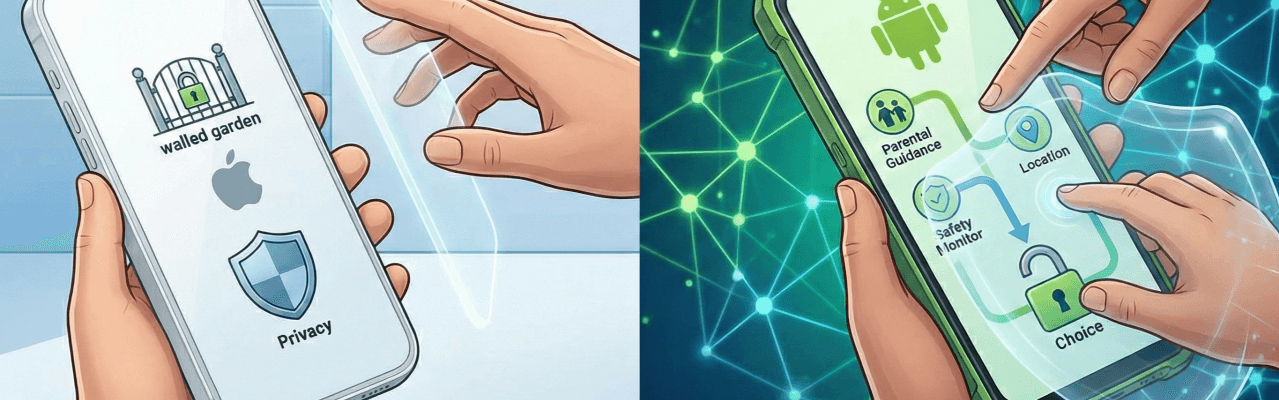
  • Apple prioritizes a “walled garden” approach to privacy. While noble in theory, this policy severely limits third-party applications’ ability to provide robust child protection services.
  • Google, on the other hand, adopts a policy that balances privacy with parental choice. They have established strict guidelines: apps can request monitoring permissions, but they must transparently explain what is being accessed and why. If a parent chooses to grant those permissions to protect their child, the OS allows it.

The Result: On an Android device, we can run child protection services that are significantly more effective, practical, and deep than what is possible on an iPhone. The proof is in the market – virtually all dedicated “safe phones” for kids available today are built on the Android platform, not iOS.

The Social Pressure vs. Online Child Safety

This creates a massive challenge for parents, particularly in markets like the US where the iPhone is a status symbol. Parents face immense pressure to provide their children with iPhones to avoid social exclusion (the “Green Bubble” stigma). Yet, by doing so, they inadvertently back themselves into a corner with very limited tools to monitor and protect their children in the digital social sphere.

A Regulatory Blind Spot

Current regulatory discussions on child safety are heavily focused on blocking access to social platforms. While well-intentioned, I believe this misses a crucial opportunity.

Instead of just trying to ban usage, regulators should demand that OS providers (specifically Apple) open up their APIs to legitimate child safety vendors. We need the ability to monitor and protect children on the device level – capabilities that the OS providers themselves are not fully offering.

The Privacy Paradox: The Life360 Example

Critics often cite strict privacy as the reason for locking down devices. But do parents actually prefer total privacy over safety?

Look at Life360, a location service with over 90 million users, mostly families. As a public company, they have disclosed that the data collected from their free-tier users (about 97% of their base) is sold to third parties to fund the operation. Despite the known trade-off between privacy and utility, millions of families use it daily.

The lesson? Parents are willing to share data if it means keeping their children safe.

Driving Change: The “First Phone” Opportunity

Let’s be realistic: attempting to switch a teenager from an iPhone to an Android is virtually a “mission impossible” due to social dynamics. However, parents hold the power when purchasing the very first smartphone, typically around age 10.

This is the precise moment when children take their first steps into the digital world, a critical stage where deep parental involvement and guidance are essential, not optional. Therefore, I strongly recommend utilizing this window of opportunity to ensure their first device is Android-based. It is the most effective way to guarantee you have the necessary tools to guide and protect them during these formative years.

Let’s prioritize safety over status.

Digital Parenting, online child safety, safe internet use, social media

Jonathan Haidt, Pac-Man, and What Parents Are Missing

<< All Resources
Share:

Like many parents, I recently received a message from my wife with a link to a podcast by Jonathan Haidt. She sent it with a note of deep concern about how the digital world is affecting our young daughters.

It was ironic. Why? Because I am the CEO of PureSight, a company that builds tools to help parents navigate exactly these challenges.

Haidt himself notes that most of his book’s buyers are mothers. They are often the first to spot these behavioral changes in children and bring this critical discussion to the family table.

The “Kids These Days” Trap

I agree with Haidt on one fundamental point: our kids are behaving differently because of screens and social media. These are challenges that previous generations never faced.

However, I believe his analysis is missing something.

Older generations always complain about “the youth of today.” I am Gen X, and there is a famous joke about my generation:

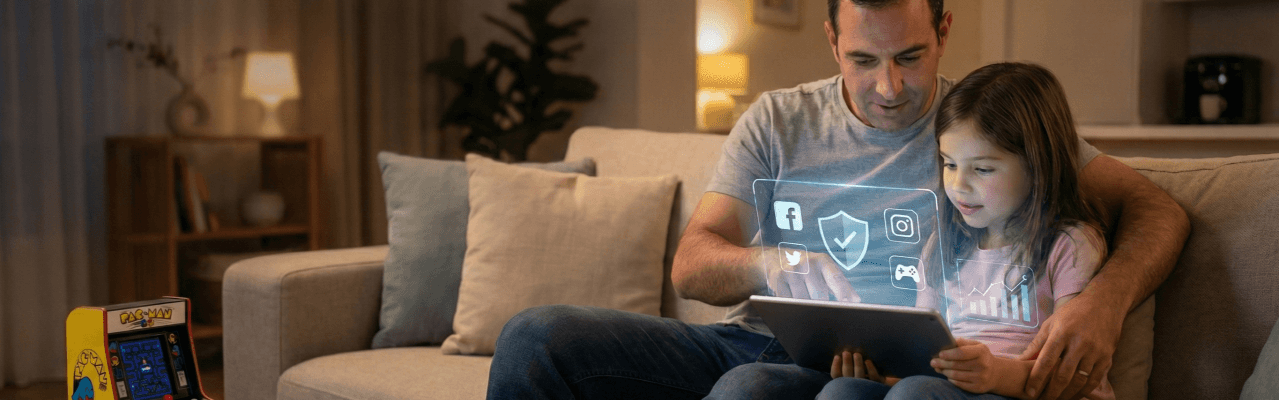
“If Pac-Man had affected us as kids, we’d all be running around in dark rooms, munching pills and listening to repetitive electronic music.”

Technically? Maybe it was true. We played video games, and later we went to dark clubs. But in the end, we turned out okay.

I believe our kids will be okay too. The digital world gives them amazing advantages we never had. Yes, there are new challenges, but we need to adapt, not panic.

Don’t Blame the Government, Empower the Parents

The biggest piece missing from Haidt’s view is the role of the family.

He focuses heavily on tech giants and asks the government for more regulations. He implies that parents are helpless against these companies.

But history shows that bans don’t really work. When Facebook required users to be 13+, it didn’t stop children. It just taught them to lie about their age to open an account.

Guidance over Bans

I believe it is safer for us to know where our kids are online. If we simply ban platforms, children will move to “underground” apps where we cannot help them.

Our job as parents is to educate, guide, and protect, just like we teach them to cross a busy street.

Digital life is here to stay. Our kids are not ready to face it alone; they need our compass. I believe in a balanced approach:

  1. Allow them to enter the digital world.
  2. Equip parents with tools to monitor activity and get alerts if the kids encounter dangerous content.

Looking to the Future

Serious incidents do happen online, and we must remain alert. But we should not try to turn back time.

I am confident that in a few years, we will look at this generation’s achievements with pride. And inevitably, they will grow up to stress about the changes facing their own children. 😊

online child safety, parenting, safe internet use

Why “Parental Control” Is No Longer Enough – And Why We Must Shift to Online Child Safety

<< All Resources
Share:

In marketing, we know that when a product enters a new market first, its name often becomes the name of the entire category. Think of Zoom, it became the generic term for video conferencing, even when people were actually using Teams, Google Meet, or another platform.

In the world of child protection online, a similar thing happened. For many years, the category has been known as “Parental Control.” It’s a term born in the early days of the industry, when solutions focused mainly on web content filtering.

But after more than a decade in this field, and as a father of four (not so little) kids. I’ve never truly connected to the idea that a parent’s role is to control their children.

Our children are not robots. And I don’t believe that controlling them is the goal. Our role as parents is to educate, guide, and protect, while helping them gradually grow into independent, responsible digital citizens.

We Chose a New Term: “Online Child Safety Service”

At PureSight, we have chosen to move away from the old terminology. We refer to our solution as an Online Child Safety Service, because it reflects what modern families actually need today:

  • Not control.
  • Not restriction for the sake of restriction.
  • But involvement, awareness, and timely guidance.

The digital world has changed dramatically. If once the main risk was inappropriate websites, today the challenge is very different:

  • 📱 Kids spend far less time “browsing the internet.”
  • 📲 And significantly more time inside dedicated social, gaming, and messaging platforms.

This shift created an entirely new reality for parents.

The New Parenting Challenge

Every parent knows this moment:

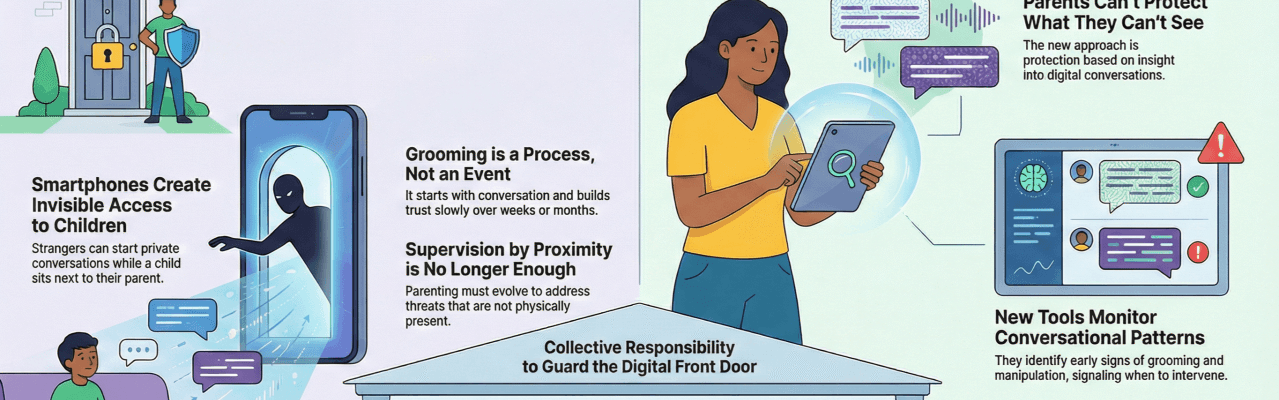
You’re sitting in the living room with your child. They are next to you, holding a smartphone. Yet you have no idea:

  • Who they are talking to
  • What content they’re seeing
  • What conversations they are involved in
  • Or what is happening inside those apps

This lack of parental visibility is not a small issue. It removes a parent’s ability to guide, support, and protect. And that is a fundamental problem.

Regulation Is Coming – But Often Focused on Yesterday’s Problems

Across the world, more governments are realizing their responsibility to protect children online. This is encouraging, but many of these regulatory efforts still focus on yesterday’s challenges:

  • Traditional content filtering
  • Age-based blocking of entire platforms
  • Attempts to isolate children from digital life altogether

But as I’ve said before: I don’t believe full isolation is the answer.

Social platforms are the “digital roads” of our time. Just like real roads, we can’t keep children away from them forever.

  • We don’t ban kids from crossing the street.
  • We teachthem how to cross safely.
  • We hold their handwhen they’re young.
  • And gradually, as they mature, they learn to navigate it on their own.

The digital world demands the same approach.

Modern Child Safety Must Focus on Social Platforms

To truly protect children today, safety solutions must be able to:

     ✔️ Monitor online interactions in social platforms
     ✔️ Detect risks early
     ✔️ Alert parents when intervention is needed

Because the real threats today are:

  • Cyberbullying
  • Predators initiating contact with children
  • Harmful content and dangerous trends
  • Emotional pressure or manipulation
  • Exposure to age-inappropriate material

Parents don’t need to “control” their kids.

  • They need awareness.
  • They need timely information.
  • They need the ability to remain involved, without intruding, and without breaking trust.

Our Mission at PureSight

At PureSight , this has been our mission from day one:

To empower parents with the right insights at the right time , so they can protect, guide, and support their children in the digital world.

Not through control. But through smart, AI-driven, respectful, and age-appropriate guidance.

As the digital world continues to evolve, so must the tools and language we use to keep our children safe.

And it starts by letting go of old terminology, and embracing the real challenge of our time: Online Child Safety.

If you’d like to explore how we support millions of families worldwide with AI-powered child protection, I’d be happy to connect.


Royi Cohen

CEO @ PureSight | Global expert on Online Child Safety, developing platforms and services for the global market.
Cyberbullying, Digital Parenting, online child safety, Online predators, safe internet use

When One Video Moves a Country: 10 Days from Viral Video to Law – What’s Next?

<< All Resources
Share:

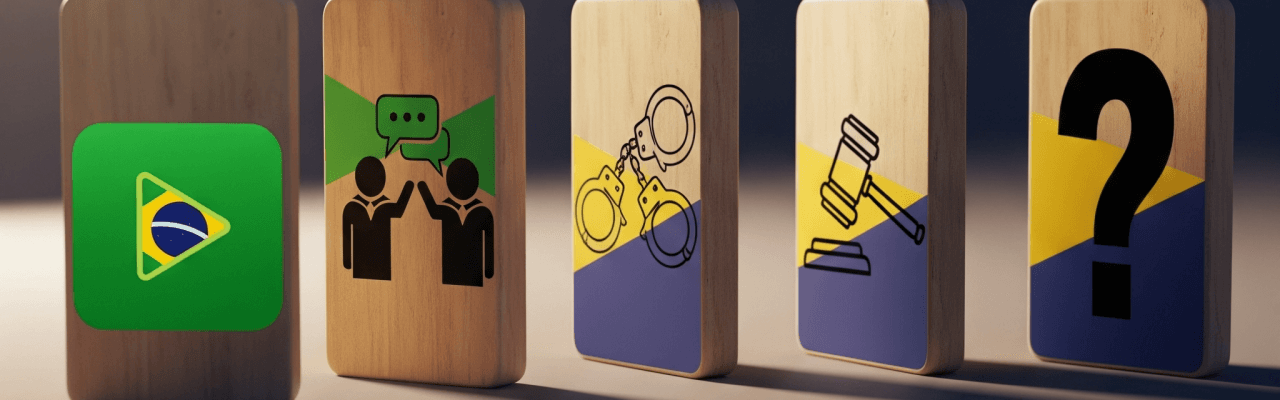
In the last week and a half, Brazil moved fast: a huge public debate about “adultização” (pushing kids to act like adults online), arrests, and a bill pushed forward quickly. This shows the topic is urgent, but we also need to act wisely, not only fast.

What happened – 10-day timeline:

  • August 6 – YouTuber Felca posts a long video on “adultização.” It goes viral and starts a national conversation.
  • August 11 – Reports say there are active investigations and that some accounts were removed. The story leads the news.
  • August 15 – Influencer Hytalo Santos and his spouse are arrested as part of cases tied to harm and exploitation of minors.
  • August 19 – The Chamber of Deputies approves fast-track status for a child online-safety bill.
  • August 20–21 – The main draft passes in the Chamber, and the bill goes back to the Senate for more debate.

What we do need: smart rules + one global device standard

We should build an open, global standard for child safety on devices, made by regulators, operating-system makers (iOS/Android/Windows/macOS/ChromeOS), device makers, platforms, and child-safety companies. Key ideas:

  • One clear approach across apps and platforms: not a patchwork where every app has different settings and parents must search in each one to protect their kids.
  • Built-in OS tools for child-risk and wellbeing signals (chat, media, location, screen time), with parent choice to turn them on and to turn them off.
  • Parent-approved oversight by trusted child-safety services: the standard should let certified services, with the parent’s permission, watch for risk signals across apps/devices and raise quick alerts when a child needs help or attention.
  • Privacy by design: do as much as possible on the device, keep only the data you need, use strong encryption, and store data safely (on device and/or secure cloud).
  • Clear and checkable: exportable logs, strong security rules, and independent labs to test and certify.
  • Works well with others: a shared way to handle key features (filtering, risk signals, parental controls) so parents can switch providers without losing basic functions.
  • Right duties for platforms (age checks, exposure limits, reporting paths), aligned with the device layer so nothing falls through the cracks.
  • Simple success metrics: fewer cases of harm, faster response times, and better alerts (fewer false alarms and fewer missed cases), plus real gains in child wellbeing.

Bottom line

Brazil’s wake-up call is important, and it’s a chance to do better. Let’s turn this energy into a single, comprehensive standard on devices plus balanced rules for platforms. We can truly protect kids, without putting impossible pressure on parents and without killing innovation. One clear standard, plus parent-approved oversight by trusted safety services, can make it practical to spot risks and alert parents when they need to step in.

I’d love to hear your thoughts: what principles would you add to such a standard?


Royi Cohen

CEO @ PureSight | Global expert on Online Child Safety, developing platforms and services for the global market.
regulation, Sexting, social media

What is the “Ghostlighting” Dating Trend?

<< All Resources
Share:

The “Ghostlighting” Dating Trend

A concerning new dating behavior called “Ghostlighting” is emerging in online relationship culture. The term blends ghosting, which means cutting off contact without explanation, with gaslighting, which means manipulating someone into doubting their own perception of reality. In ghostlighting, a partner suddenly disappears from communication, only to later return and deny any wrongdoing, often suggesting the other person misunderstood or overreacted.

Experts warn that ghostlighting can be emotionally damaging, leaving individuals confused, anxious, and questioning their own memory or judgment. This tactic can erode self-esteem, create distrust in future relationships, and in some cases be part of a broader pattern of emotional manipulation.

The trend is reportedly being amplified by dating apps and social media. Disappearing and reappearing in someone’s life can be done with minimal effort and little accountability in these digital spaces. The casual nature of online connections makes it easier for ghostlighters to avoid confrontation while still keeping someone emotionally tethered.

How Teens Can Be Influenced?

Teens who are new to dating, particularly in the fast-paced and always-connected world of messaging apps and social media, may be especially vulnerable to ghostlighting. Many are still developing the emotional resilience, communication skills, and self-worth needed to navigate relationships. Experiencing ghostlighting at a young age can:

  • Normalize unhealthy relationship patterns and lower expectations for respect and clear communication.

  • Distort self-image by making teens doubt their instincts and judgment when told they overreacted.

  • Create emotional dependency, as the unpredictable cycle of disappearance and return fuels a craving for the ghostlighter’s validation.

  • Increase social stress, since online platforms can make these dynamics public, which may lead to embarrassment or peer pressure.

For impressionable teens, the mix of romantic interest, online visibility, and emotional manipulation can create a lasting impact on how they view trust, boundaries, and self-worth in future relationships.

Protecting Against Ghostlighting

At PureSight, we use advanced AI tools to detect manipulative text and recognize ghostlighting behaviors in real time. We track activity across social media, messaging apps, and gaming platforms, identifying new and disturbing trends as they emerge.

When signs of toxic behavior appear—such as sudden disappearance followed by denial or blame-shifting—we send timely alerts to parents. This allows families to step in, support their teen, and address the issue before it escalates.

By combining early detection with practical guidance, PureSight helps parents safeguard their children’s emotional well-being and teach them what healthy relationships should look like, both online and offline.

David Gil,

Research team lead at PureSight
Gaslighting, Ghosting, online child safety, prevention

Who Will Take on This Global Mission to Protect Our Children Online?

<< All Resources
Share:

Who Will Take on This Global Mission to Protect Our Children Online?

Recently, two young girls in Israel, just 7 and 10 years old, were rushed to the hospital after swallowing coins. One of them even required surgery to remove the coin from her airway. The reason? A viral TikTok challenge where children attempt to “make a coin disappear” and pull it out of their mouths.

Following these incidents, a hospital doctor issued a warning to parents: “We discovered a TikTok challenge caused this. Parents, especially now during the summer vacation, please pay close attention to what your children are doing online, and explain the risks to them.”

The Age Factor Matters

The critical point here is age. Social media trends and pressures are already influencing children as young as 7.

These platforms don’t just affect teens; they shape behaviors at even younger ages, when kids are most vulnerable.

Australia has already taken bold action, passing legislation that bans children under 16 from using platforms like TikTok, Snapchat, and, more recently, YouTube. While I’m not sure how practical or enforceable such laws will be, I also don’t believe in completely blocking platforms that have become deeply embedded in modern life. Social media can carry risks—but it also provides opportunities and benefits.

A Balanced Approach: Delay, Then Guide

What I do believe in is delaying exposure. Parents and communities should work together to postpone the age at which children join digital platforms, helping reduce social pressure on any single child. And when the time comes for them to enter the digital world, they must not walk in alone.

Just as we guide our kids in the physical world, teaching them how to cross the street safely or how to handle difficult social situations, we must also guide them in the digital world. Sitting on the couch while your child scrolls on their phone, with no idea who they’re talking to, what they’re watching, or what challenges they’re trying, is no longer acceptable.

Parents Must Step In

The first generation of parents largely dismissed this responsibility, saying, “There’s nothing we can do.” But today, an increasing number of parents understand that digital safety is our responsibility. And thankfully, there are services and technologies available that allow parents to be informed and provide guidance, even when their children are using personal devices and social media platforms.

Regulation: Privacy vs. Protection

Here lies one of the greatest challenges of our time: balancing children’s right to privacy with the need for protective monitoring. To keep kids safe, we must allow authorized services to collect limited, transparent data on children’s online activities, not to sell, not to exploit, but to alert parents when risks arise and intervention is needed.

This is a complex challenge, but solvable. A global standard can be created: when a child’s profile is active on a device, authorized safety services should be able to monitor activity, while ensuring data is shared only with the parents, in a transparent and regulated way.

A Call to Action

This, in my view, should be the mission of global regulation. Not just banning access. Not just turning a blind eye. But creating a structured, transparent framework where parents can fulfill their duty to guide and protect their children in the digital world.

So I ask: Who will take on this global mission?

CEO @ PureSight | Global expert on Online Child Safety, developing platforms and services for the global market.

online child safety, prevention, regulation, safe internet use

Why the Digital World Needs a New Kind of Regulator

<< All Resources
Share:

🎯 The Illusion of Action

Last year, the U.S. Congress summoned the leaders of the major social media platforms for a much-publicized hearing. The goal, at least on paper, was important: protecting our children online. However, instead of leading to actionable steps, much of the discussion devolved into political theater.

One of the few tangible outcomes?
Meta decided to shut down its own content validation team, the team responsible for monitoring and verifying the nature of content on its platforms.

Why?

Because they realized that simply having such a team made them a target. If they claimed to review content, they could be held accountable for it.

🚧 Platforms Are Not the Police

I often compare the digital world to our roads. Think of telecom providers as those who build the highways, responsible for infrastructure. Digital platforms are like car manufacturers, giving us the means to travel.

But just as we don’t expect Toyota or a road company to enforce driver behavior, we shouldn’t expect social media platforms to police every user. That job belongs to regulators.

🌍 A Borderless World, A Regulatory Void

Here’s the problem: roads exist within countries. Each has its own laws and enforcement. But the digital world? It knows no borders. Harmful behavior, bullying, exploitation, and misinformation flow freely across apps, servers, and time zones.

We’re left without a single authority responsible for setting global standards.

🧭 The Need for an Over-Authority

What we’re missing is a global entity, an overarching authority to regulate the digital world. A body with teeth. Not owned by governments or corporations, but with the ability to define and enforce rules that protect the most vulnerable, especially our children.

Sounds like science fiction? It might be. But maybe that’s exactly what we need.

🌌 Sci-Fi Had It Right All Along

Take Star Wars, for example. The Galactic Republic tried to govern thousands of planets through a central senate and shared laws. However, even that grand vision crumbled under the weight of bureaucracy and manipulation.

Today’s digital world faces a similar fate. We don’t need lightsabers or hyperspace, but we do need structure, clarity, and above all: accountability

🛡️ What We’re Doing at PureSight

At PureSight, we’re not waiting for global policy to catch up. We’ve built AI-powered tools that empower parents to protect their kids online, right now. Tools that detect risks like cyberbullying, predatory behavior, and harmful content. Tools that work regardless of what the tech giants choose to do.

Because families can’t afford to wait.

🧠 A Call for Vision and Action

Technology alone isn’t enough. We need bold thinking, shared responsibility, and a new kind of regulator for a borderless world. Our kids deserve nothing less.

Let’s build something better for them.

Royi Cohen, CEO of PureSight

Between Screens and Human Connection: Why New York’s Smartphone Ban in Elementary Schools Matters

<< All Resources
Share:

At the beginning of the month, New York Governor Kathy Hochul made headlines by announcing a bold new policy: starting in the 2025–2026 school year, the use of smartphones will be banned in public elementary schools across the state. This is more than just a policy change; it’s a powerful statement of values: let’s give our children back their ability to focus, to learn, and to build real social connections.

Governor Kathy Hochul’s decision not only puts important regulations in motion, but it also raises critical public awareness. Educators and parents alike have seen the negative effects of constant digital distraction on young children. Following the COVID-19 pandemic, we’ve witnessed firsthand how the lack of in-person interaction has affected our children’s social development. This new initiative creates space, literally and figuratively , for kids to engage with the world around them.

Still, even though the goal is clear and important, the situation is more complicated. Today, digital platforms are a big part of kids’ social lives. Even in elementary schools where smartphones are usually not allowed, teachers sometimes ask students to use them in class, for learning activities or to practice using digital tools. Like it or not, these devices are part of how children learn to live and grow in the modern world.

We, as parents, are living this dilemma every day. On one hand, we want our children to enjoy a screen-free childhood, full of real-life adventures, face-to-face conversations, and undivided attention. On the other hand, we understand that knowing how to use digital tools is no longer a choice. We must teach our kids how to navigate online platforms safely, ethically, and effectively. And to teach them, we sometimes need to let them use these tools.

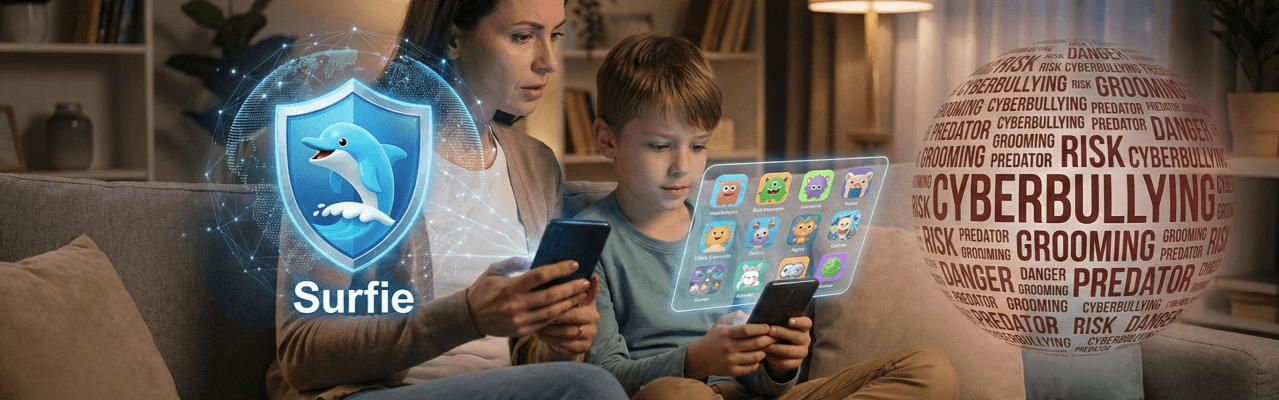
At PureSight, we deeply understand these challenges. That’s exactly why we’ve built our digital parenting tools, Surfie, to help families manage this balancing act. Our AI-powered service provides smart alerts to parents when online threats emerge, such as cyberbullying, sextortion, or predatory behavior, allowing parents to intervene when it matters most.

This is the kind of support families need: not just rules or restrictions, but practical, adaptive tools that allow children to grow safely in both the physical and digital worlds.

So yes, Governor Hochul’s initiative is a big step in the right direction. But let’s also remember that keeping kids safe in the digital age requires more than bans. It requires education, collaboration, and smart solutions that empower both parents and children.

Don’t wait, Schedule Puresight demo today!