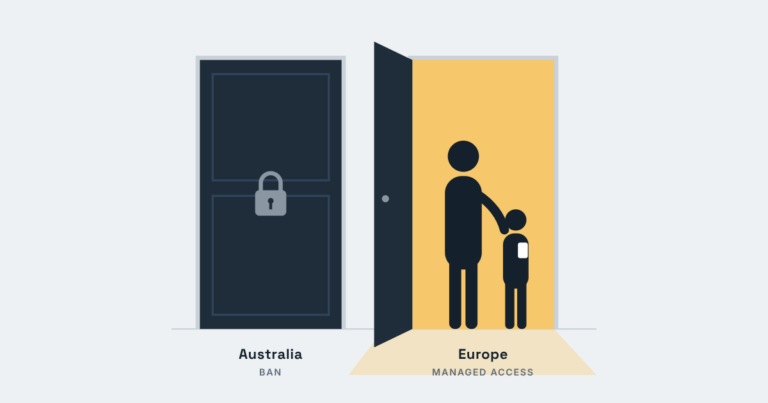



For many children, this holiday season will bring their first smartphone. The age matters. But how you hand it over may matter just as much.
By Royi Cohen, CEO of PureSight
In a few weeks, many children will tear open a small box and find their first smartphone. For them, it’s the best gift of the year. For many parents, it comes with a quiet worry: is my child ready for this?
It’s a fair question. According to the Pew Research Center, 57% of parents of 11- and 12-year-olds in the US say their child already has a smartphone. For many families, the first phone is no longer a question of “if” but “when” and “how”.
In my work, I have learned that the moment a child gets their first phone is one of the key steps in building their readiness and helping them learn to navigate the online world responsibly. It’s the moment habits are formed, rules are set, and trust is built or lost.
Does age matter?
An earlier study found that children who got a smartphone between ages 12 and 13 had higher odds of reporting clinically significant mental health symptoms and insufficient sleep at age 13.
A later study in JAMA Pediatrics followed nearly 2,000 teens. Getting a smartphone around age 13 was associated with insufficient sleep at age 14. Among teens who got a smartphone, heavy use, more than five hours a day, was linked to higher odds of depression. Teens who kept their phones outside the bedroom at bedtime were less likely to report insufficient sleep.
Age is one part of the decision. The habits you build from day one matter, too.
Think of it like learning to use the road
When a child is learning road safety, we don’t let them walk alone next to a busy road. We hold their hand. We start by crossing quiet streets together and explain what to watch for. As they show us they’re ready, we give them a little more independence.
A first phone should work the same way. Not locked down forever, and not wide open from day one. A path, step by step, with you walking beside them.
Five steps for setting up the first phone
1. Set up the phone together. When you open the box, create an account for your child. Use an online child safety service from the start to put the family rules you’ve agreed on into practice. It’s easier to start with those protections in place than to add them later, once the phone already feels like theirs.
2. Agree on the rules together. Sit down and write a short family agreement. Keep it simple: Where does the phone sleep at night? (Outside the bedroom is a good start.) How much time each day? Which apps are allowed for now? What happens if something goes wrong? Rules a child helped make are rules a child is more likely to keep.
3. Start small, then grow. Begin with a few apps: messaging with family and friends, maybe a game or two. Add more as your child shows they can handle it. Every new app can be a small milestone, not a fight.
4. Be open about protection. If you use online child safety services or a safety service, tell your child it’s there and why. Not “I’m watching you”, but “I’m here if something goes wrong”. Children who know protection exists, and understand it, are more likely to come to you when something feels off.
5. Make “tell me” the most important rule. Before the phone is even switched on, agree on this: if something online feels wrong, scary or confusing, you’ll deal with it together. And telling you will never be the thing that gets them in trouble.
The first weeks matter most
The holidays are a perfect time to learn together. Ask your child to show you what they’re doing. Play the game they downloaded. If you use an online child safety service, explain how it can alert you if something in a group chat needs attention. Keep the conversation going. Ask what they like about being online and what has surprised them so far.
Talk, in simple words, about the things that can go wrong: a stranger who asks for photos or secrets, a group chat that turns mean, a video that upsets them. You don’t need to scare them. You need them to know that these things happen, that it’s never their fault, and that you’re the first person to call.
Then keep checking in. A few minutes once a week is enough: “Anything funny online this week? Anything weird?”
The phone is the gift. You are the protection.
No settings screen and no app can replace a parent who is involved. Good tools can reduce what a child is exposed to, and alert you when something needs your attention. But the real protection is a child who knows they can come to you.
So this year, when you wrap that phone, add one more thing to the box: a promise to walk this road with them.