
Who Will Take on This Global Mission to Protect Our Children Online?
Recently, two young girls in Israel, just 7 and 10 years old, were rushed to the hospital after swallowing coins. One of them even required surgery to remove the coin from her airway. The reason? A viral TikTok challenge where children attempt to “make a coin disappear” and pull it out of their mouths.
Following these incidents, a hospital doctor issued a warning to parents: “We discovered a TikTok challenge caused this. Parents, especially now during the summer vacation, please pay close attention to what your children are doing online, and explain the risks to them.”
The Age Factor Matters
The critical point here is age. Social media trends and pressures are already influencing children as young as 7.
These platforms don’t just affect teens; they shape behaviors at even younger ages, when kids are most vulnerable.
Australia has already taken bold action, passing legislation that bans children under 16 from using platforms like TikTok, Snapchat, and, more recently, YouTube. While I’m not sure how practical or enforceable such laws will be, I also don’t believe in completely blocking platforms that have become deeply embedded in modern life. Social media can carry risks—but it also provides opportunities and benefits.
A Balanced Approach: Delay, Then Guide
What I do believe in is delaying exposure. Parents and communities should work together to postpone the age at which children join digital platforms, helping reduce social pressure on any single child. And when the time comes for them to enter the digital world, they must not walk in alone.
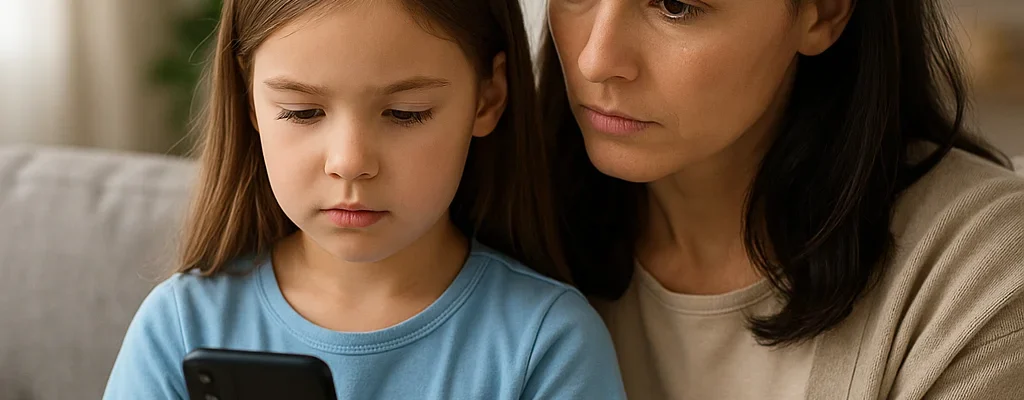
Just as we guide our kids in the physical world, teaching them how to cross the street safely or how to handle difficult social situations, we must also guide them in the digital world. Sitting on the couch while your child scrolls on their phone, with no idea who they’re talking to, what they’re watching, or what challenges they’re trying, is no longer acceptable.
Parents Must Step In
The first generation of parents largely dismissed this responsibility, saying, “There’s nothing we can do.” But today, an increasing number of parents understand that digital safety is our responsibility. And thankfully, there are services and technologies available that allow parents to be informed and provide guidance, even when their children are using personal devices and social media platforms.
Regulation: Privacy vs. Protection
Here lies one of the greatest challenges of our time: balancing children’s right to privacy with the need for protective monitoring. To keep kids safe, we must allow authorized services to collect limited, transparent data on children’s online activities, not to sell, not to exploit, but to alert parents when risks arise and intervention is needed.
This is a complex challenge, but solvable. A global standard can be created: when a child’s profile is active on a device, authorized safety services should be able to monitor activity, while ensuring data is shared only with the parents, in a transparent and regulated way.
A Call to Action
This, in my view, should be the mission of global regulation. Not just banning access. Not just turning a blind eye. But creating a structured, transparent framework where parents can fulfill their duty to guide and protect their children in the digital world.
So I ask: Who will take on this global mission?
CEO @ PureSight | Global expert on Online Child Safety, developing platforms and services for the global market.