

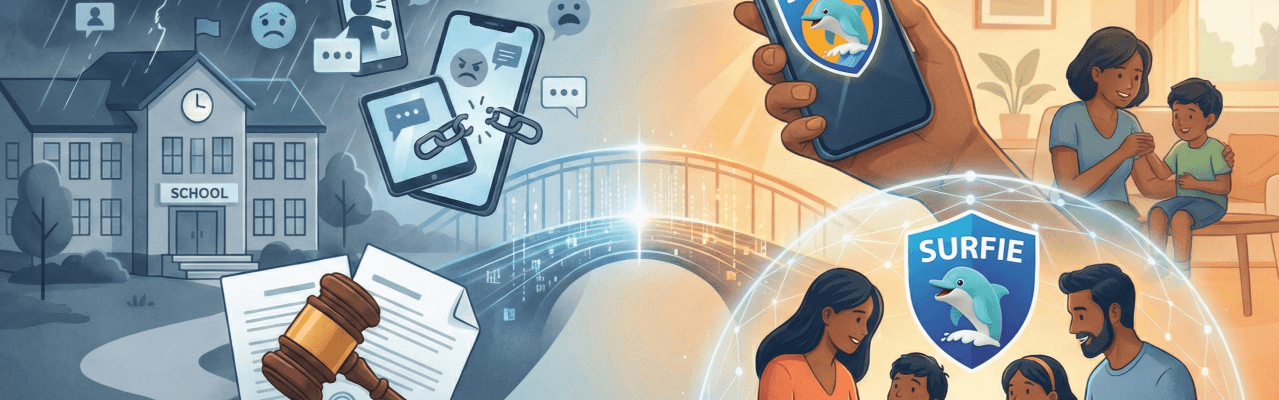
A recent court ruling in Spain is sending shockwaves through educational institutions across Europe, and it is only a matter of time before the impact is felt worldwide. A school was ordered to pay significant compensation to a student for severe bullying, much of which took place on social media, entirely outside of school hours and off-campus.
The message is unmistakable: Schools are now being held legally and financially responsible for a problem they cannot see.
The Core Conflict: Responsibility Without Visibility
School leaders are being pushed into an impossible position.
- The Law: Increasingly demands that schools prevent and respond to digital harm within their student community.
- Privacy Regulations: Strictly prohibit schools from accessing students’ private interactions on WhatsApp, TikTok, or Instagram.
This creates a high-stakes paradox: How can a school mitigate a digital crisis that it is legally forbidden to monitor?
The Solution: Privacy by Design, Safety by Context
At PureSight , we believe the answer isn’t to turn schools into surveillance hubs, but to solve the ultimate digital parenting dilemma: How do you protect a child’s safety without violating their right to privacy?
We built Surfie to bridge this gap. Our AI engine doesn’t expose a child’s entire digital life or every private conversation to their parents. Instead, it respects the child’s privacy by working silently in the background, only “raising a flag” when it identifies high-risk events that demand adult intervention.
By analyzing context and emotional tone rather than just flagging keywords, Surfie provides parents with actionable awareness regarding:
- Cyberbullying & Harassment: Distinguishing between friendly banter and systemic, harmful shaming.
- Predatory Grooming: Detecting sophisticated approaches by pedophiles early in the cycle.
- Dangerous Viral Trends: Identifying life-threatening social media challenges before they escalate.
This model preserves the child’s digital autonomy while ensuring that when a real threat emerges, the parents are informed and empowered to respond according to their own judgment and values.
The “Two-Family Rule”: Small Action, Community Impact
Our data reveals a fascinating insight: You don’t need an entire classroom to adopt safety tools to change the culture.
Two proactive families are often enough. When even one parent receives an early warning and intervenes, by talking to their child or reaching out to another parent, the cycle of escalation is broken. That single intervention disrupts the toxic dynamic for the entire class. Digital awareness creates real-world stability.
My Advice to School Leaders
The legal pressure is mounting, and the Spanish case proves that “it happened online” is no longer a valid defense. However, the answer is not for educators to become investigators. Instead:
- Empower Parents: Provide them with the tools to be the “digital first responders” for their own children.
- Maintain Clear Boundaries: Keep the school out of private messages to avoid legal, ethical, and privacy conflicts.
- Prevent Litigation: Build a community-level shield that stops bullying before it escalates to a headline or a lawsuit.
It’s time to modernize school safety. By giving parents the visibility they need without compromising student privacy, we protect the children, the parents, and the institutions that serve them.