


Cyberbulllying is probably a lot more prevalent than you think. The statistics are in fact quite shocking. Take a look at these figures:
According to the Cyberbullying Research Center (2014):
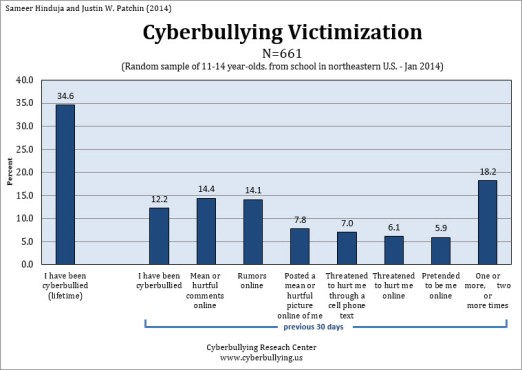
Approximately 35% of students aged 11-14 experience cyberbullying in their lifetimes.
Mean or hurtful comments (14.4%) and rumors spread (14.1%) online are the most common types of cyberbullying.
Adolescent girls are significantly more likely to have experienced cyberbullying in their lifetimes (40.1% vs. 29.3%).
And take a look at these additional facts:
A poll conducted in 24 countries by the global research company Ipsos for Reuters News, the results of which were published in January 2012 found the following:
- One in ten parents online (12%) around the world say their child has experienced cyberbullying
- One in four (24%) of those parents say they know a child in their community who has experienced cyberbulllying and of those, 60% say the children experienced the harrassing behaviour on social networking sites like Facebook.
A Consumer Reports survey conducted in the US in early 2011 reveals the following shocking statistic:
One million children were harassed, threatened, or subjected to other forms of cyberbullying on Facebook in the past year!
Cyberbulllying around the world
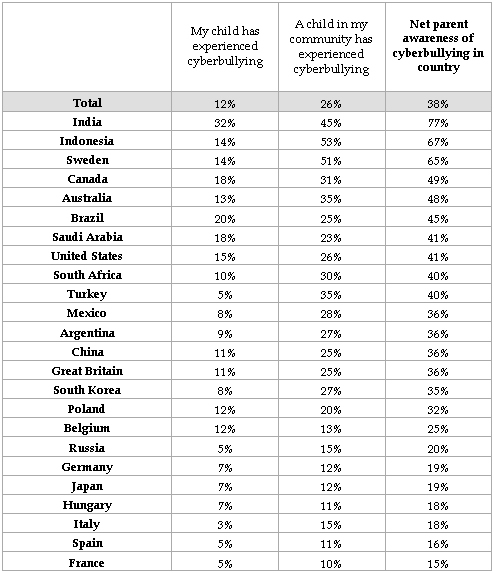
The following table demonstrates parents’ attitudes to cyberbullying in 24 countries, including whether or not their child has been cyberbullied.
How do cyberbulllying victims feel?
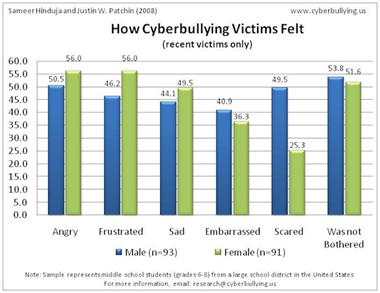
According to the Cyberbullying Research Center both boys and girls are likely to report feeling angry, sad, and embarrassed.
Slightly more girls than boys feel frustrated, while significantly more boys are scared as a result of cyberbulllying.
According to the AP-MTV survey, 56% of those who have been bullied reported that they were “very” or “extremely” upset the most recent time they were targeted. Moreover, young people who have been bullied were twice as likely to have received treatment from a mental health professional and nearly 3 times more likely to have considered dropping out of school!
Cyberbulllying and self esteem
Research done by the Cyberbulllying Research Center shows that victims have lower self-esteem than non victims.
Cyberbulllying and suicide
Middle-school victims of cyberbulllying are more apt to commit suicide. The AP-MTV survey found that 8% of cyberbulllying victims and 12% of sexting victims have considered ending their own life compared to 3% of people who have not been bullied and were not involved in sexting.
But do they think before they act?
It’s also interesting to note that according to the AP-MTV survey, only about half (51%) of young people say they have thought the idea that things they post online could come back to hurt them later. In other words – about half of the young people do not think before they post!
Cyberbulllying is a serious issue. Click here to find out what you can do to prevent it.