

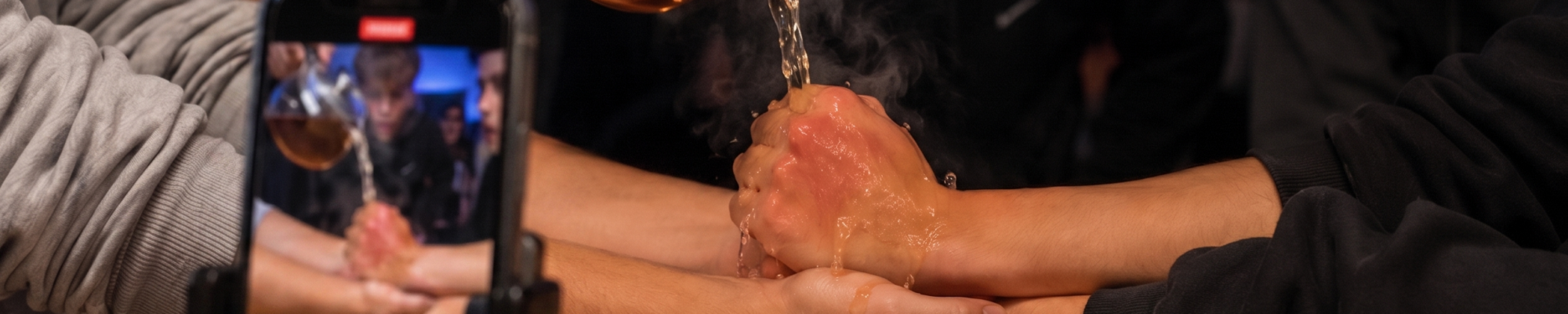
The Hot Tea Challenge

<< All Resources
Share:

What Does the “Breath Holding” Challenge Involve?

Some viral challenges rely on speed or surprise. This one relies on pain. In the Hot Tea Challenge, also called a loyalty check, people pour very hot tea over joined hands and watch who pulls away first.

At first, teens may treat the clip like a relationship test or prank. However, the challenge sends a harmful message: staying in pain proves love, loyalty, courage, or trust. Therefore, parents should view it as both a burn risk and a pressure-based online behavior.

What the Video Usually Shows

The format usually starts with two people holding hands. Next, someone pours hot or boiling tea over them. Then viewers wait to see who reacts first. Some posts frame the moment as a couple challenge, while others present it as a friendship test or dare.

Because the video looks short, teens may miss the real outcome. Hot liquid can injure skin within seconds. In addition, the clip may end before viewers see medical treatment, lasting marks, or the embarrassment that follows.

Signals Parents Can Watch For

  • Mentions of hot tea, boiling tea, loyalty checks, hand tests, or pain-based relationship challenges.
  • Videos where teens laugh at someone who gets hurt, burned, pressured, or embarrassed.
  • New burns, redness, blisters, bandages, or hesitation to explain an injury on the hand or wrist.
  • Relationship pressure that treats discomfort or humiliation as proof of love or trust.

David Gil,

Research team lead at PureSight

child protection, Cyberbullying, Digital Parenting, online child safety

The “Breath Holding” Challenge

<< All Resources
Share:

What Does the “Breath Holding” Challenge Involve?

The “Breath Holding” Challenge is a dangerous social media trend in which children or teens try to hold their breath for as long as possible, sometimes underwater, sometimes while applying pressure to the neck, or while copying videos that present the behavior as a game.

The challenge can look simple or even harmless at first because it is framed as endurance, bravery, or a way to prove control. The real concern is that restricting breathing or reducing oxygen to the brain can lead to fainting, falls, drowning, seizures, cardiac problems, or life-threatening injury.

In early 2026, school and safety authorities in Dubai warned families about dangerous physical challenges being reported among students, including choking, breath holding, pressure to the head or neck, and other viral behaviors. For parents, the key point is that these are not jokes or playground games. They are online-influenced behaviors that can become dangerous very quickly.

Why This Trend Is Dangerous?

The danger comes from the way the challenge hides risk behind simple instructions. A teen may think they are only holding their breath for a few seconds, but oxygen loss can affect judgment, balance, and consciousness very quickly.

  • A child can faint without enough warning to stop safely.
  • If the challenge happens in water, fainting can quickly become drowning.
  • If pressure is placed on the neck, breathing and blood flow can both be affected.
  • If a teen collapses, the fall itself can cause head, neck, or back injuries.
  • Trying to film the challenge can delay help because friends may focus on the video instead of the danger.

What Parents May Notice?

Parents do not need to know every version of every online challenge. It is more useful to notice changes in language, behavior, and secrecy around risky content.

  • Mentions of breath holding, blackout games, choking games, passing out, or “how long can you last” challenges.
  • Videos or searches about dangerous dares, school challenges, or ways to make someone faint.
  • Unexplained dizziness, headaches, fainting, bloodshot eyes, or marks around the neck.
  • Sudden secrecy around social media, group chats, or videos shared by classmates.

A calm question is often the best first step. Parents can ask what their child has seen, whether classmates are talking about it, and whether anyone has tried it at school or online.

David Gil,

Research team lead at PureSight

child protection, dangers, parenting
Don’t wait, Schedule Puresight demo today!