Knowing Your Child in the Physical World Is Only Knowing Half of Your Child

<< All Resources
Share:

I recently watched a powerful interview on the Shawn Ryan Show with Elizabeth Phillips, and it stayed with me.

Elizabeth is the founder of No More Victims and Executive Director of the Phillips Foundation. Her mission is personal: her younger brother, Trey, died by suicide in 2019 after childhood sexual abuse at Kanakuk Kamps. The abuse was hidden for years because of a strict NDA.

When someone with her experience speaks, every parent should listen.

How Predators Use “Innocent” Apps Like Venmo

Elizabeth explained something every parent needs to understand:

Predators no longer hide in dark corners of the internet. They use the same apps our kids use every day.

Venmo is one example.

Teens use it to split bills or get paid for babysitting. But Venmo mixes a digital wallet with a social feed, and that gives predators an easy way in.

Here’s how the grooming often starts:

  • 👉 A small payment from a stranger
  • 👉 A friendly compliment about the teen’s profile photo : “You look like you could be a model.”

If the teen replies, the predator pushes further.

  • 👉 A bigger payment
  • 👉 A request for a “more personal” photo

Not sexual at first. Just “exclusive.”

But the moment that photo is sent, the tone changes. Flattery becomes pressure. Requests become threats.

This is how Sextortion starts, blackmail that traps kids in fear and shame.

Silence Makes Everything Worse

Elizabeth’s story about Trey teaches an important lesson:

Abuse grows in the dark.

Whether it’s hidden by an NDA or hidden inside an app, the result is the same: The child feels alone.

And this is the reality of modern parenting.

We would never let our child walk alone into a dangerous neighborhood. But when we give them a smartphone, we unknowingly open a direct channel to anyone, good or bad.

Many apps are too complex for parents to set up safely. And kids end up navigating the digital world on their own.

The Couch Illusion

A child can be sitting right next to us on the couch… and still be facing a serious threat online.

We often have no idea:

  • Who they talk to
  • What content they see
  • Whether someone is trying to groom them

Being in the same room is no longer enough.

Parents Don’t Need to Spy – They Need Visibility

Parents today face challenges our parents never had.

We don’t want to invade our child’s privacy. We just want to know when something is wrong, so we can step in.

This is why, in PureSight , we built Surfie.

Not as a firewall. But as a tool that gives parents the visibility they need:

  • ✅ Detects grooming, sextortion, and bullying in real time
  • ✅ Alerts parents when kids are exposed to harmful content
  • ✅ Shows which apps they use and if they are age-appropriate

Surfie doesn’t replace parenting. It supports it.

Breaking the Silence Together

Elizabeth Phillips is working hard to change laws and stop the silence that destroyed her brother. As parents, builders, and leaders, we need to make sure that same silence doesn’t happen in our homes.

Our children live in two worlds today:

  • 🌍 The physical world
  • 💻 The digital world

To protect them, we must be present in both.

Let’s make sure no child faces these dangers alone.

cyberbulllying, Cyberbullying, Digital Parenting, prevention, safe internet use, social media

Why “Parental Control” Is No Longer Enough – And Why We Must Shift to Online Child Safety

<< All Resources
Share:

In marketing, we know that when a product enters a new market first, its name often becomes the name of the entire category. Think of Zoom, it became the generic term for video conferencing, even when people were actually using Teams, Google Meet, or another platform.

In the world of child protection online, a similar thing happened. For many years, the category has been known as “Parental Control.” It’s a term born in the early days of the industry, when solutions focused mainly on web content filtering.

But after more than a decade in this field, and as a father of four (not so little) kids. I’ve never truly connected to the idea that a parent’s role is to control their children.

Our children are not robots. And I don’t believe that controlling them is the goal. Our role as parents is to educate, guide, and protect, while helping them gradually grow into independent, responsible digital citizens.

We Chose a New Term: “Online Child Safety Service”

At PureSight, we have chosen to move away from the old terminology. We refer to our solution as an Online Child Safety Service, because it reflects what modern families actually need today:

  • Not control.
  • Not restriction for the sake of restriction.
  • But involvement, awareness, and timely guidance.

The digital world has changed dramatically. If once the main risk was inappropriate websites, today the challenge is very different:

  • 📱 Kids spend far less time “browsing the internet.”
  • 📲 And significantly more time inside dedicated social, gaming, and messaging platforms.

This shift created an entirely new reality for parents.

The New Parenting Challenge

Every parent knows this moment:

You’re sitting in the living room with your child. They are next to you, holding a smartphone. Yet you have no idea:

  • Who they are talking to
  • What content they’re seeing
  • What conversations they are involved in
  • Or what is happening inside those apps

This lack of parental visibility is not a small issue. It removes a parent’s ability to guide, support, and protect. And that is a fundamental problem.

Regulation Is Coming – But Often Focused on Yesterday’s Problems

Across the world, more governments are realizing their responsibility to protect children online. This is encouraging, but many of these regulatory efforts still focus on yesterday’s challenges:

  • Traditional content filtering
  • Age-based blocking of entire platforms
  • Attempts to isolate children from digital life altogether

But as I’ve said before: I don’t believe full isolation is the answer.

Social platforms are the “digital roads” of our time. Just like real roads, we can’t keep children away from them forever.

  • We don’t ban kids from crossing the street.
  • We teachthem how to cross safely.
  • We hold their handwhen they’re young.
  • And gradually, as they mature, they learn to navigate it on their own.

The digital world demands the same approach.

Modern Child Safety Must Focus on Social Platforms

To truly protect children today, safety solutions must be able to:

     ✔️ Monitor online interactions in social platforms
     ✔️ Detect risks early
     ✔️ Alert parents when intervention is needed

Because the real threats today are:

  • Cyberbullying
  • Predators initiating contact with children
  • Harmful content and dangerous trends
  • Emotional pressure or manipulation
  • Exposure to age-inappropriate material

Parents don’t need to “control” their kids.

  • They need awareness.
  • They need timely information.
  • They need the ability to remain involved, without intruding, and without breaking trust.

Our Mission at PureSight

At PureSight , this has been our mission from day one:

To empower parents with the right insights at the right time , so they can protect, guide, and support their children in the digital world.

Not through control. But through smart, AI-driven, respectful, and age-appropriate guidance.

As the digital world continues to evolve, so must the tools and language we use to keep our children safe.

And it starts by letting go of old terminology, and embracing the real challenge of our time: Online Child Safety.

If you’d like to explore how we support millions of families worldwide with AI-powered child protection, I’d be happy to connect.


Royi Cohen

CEO @ PureSight | Global expert on Online Child Safety, developing platforms and services for the global market.
Cyberbullying, Digital Parenting, online child safety, Online predators, safe internet use

When One Video Moves a Country: 10 Days from Viral Video to Law – What’s Next?

<< All Resources
Share:

In the last week and a half, Brazil moved fast: a huge public debate about “adultização” (pushing kids to act like adults online), arrests, and a bill pushed forward quickly. This shows the topic is urgent, but we also need to act wisely, not only fast.

What happened – 10-day timeline:

  • August 6 – YouTuber Felca posts a long video on “adultização.” It goes viral and starts a national conversation.
  • August 11 – Reports say there are active investigations and that some accounts were removed. The story leads the news.
  • August 15 – Influencer Hytalo Santos and his spouse are arrested as part of cases tied to harm and exploitation of minors.
  • August 19 – The Chamber of Deputies approves fast-track status for a child online-safety bill.
  • August 20–21 – The main draft passes in the Chamber, and the bill goes back to the Senate for more debate.

What we do need: smart rules + one global device standard

We should build an open, global standard for child safety on devices, made by regulators, operating-system makers (iOS/Android/Windows/macOS/ChromeOS), device makers, platforms, and child-safety companies. Key ideas:

  • One clear approach across apps and platforms: not a patchwork where every app has different settings and parents must search in each one to protect their kids.
  • Built-in OS tools for child-risk and wellbeing signals (chat, media, location, screen time), with parent choice to turn them on and to turn them off.
  • Parent-approved oversight by trusted child-safety services: the standard should let certified services, with the parent’s permission, watch for risk signals across apps/devices and raise quick alerts when a child needs help or attention.
  • Privacy by design: do as much as possible on the device, keep only the data you need, use strong encryption, and store data safely (on device and/or secure cloud).
  • Clear and checkable: exportable logs, strong security rules, and independent labs to test and certify.
  • Works well with others: a shared way to handle key features (filtering, risk signals, parental controls) so parents can switch providers without losing basic functions.
  • Right duties for platforms (age checks, exposure limits, reporting paths), aligned with the device layer so nothing falls through the cracks.
  • Simple success metrics: fewer cases of harm, faster response times, and better alerts (fewer false alarms and fewer missed cases), plus real gains in child wellbeing.

Bottom line

Brazil’s wake-up call is important, and it’s a chance to do better. Let’s turn this energy into a single, comprehensive standard on devices plus balanced rules for platforms. We can truly protect kids, without putting impossible pressure on parents and without killing innovation. One clear standard, plus parent-approved oversight by trusted safety services, can make it practical to spot risks and alert parents when they need to step in.

I’d love to hear your thoughts: what principles would you add to such a standard?


Royi Cohen

CEO @ PureSight | Global expert on Online Child Safety, developing platforms and services for the global market.
regulation, Sexting, social media

Who Will Take on This Global Mission to Protect Our Children Online?

<< All Resources
Share:

Who Will Take on This Global Mission to Protect Our Children Online?

Recently, two young girls in Israel, just 7 and 10 years old, were rushed to the hospital after swallowing coins. One of them even required surgery to remove the coin from her airway. The reason? A viral TikTok challenge where children attempt to “make a coin disappear” and pull it out of their mouths.

Following these incidents, a hospital doctor issued a warning to parents: “We discovered a TikTok challenge caused this. Parents, especially now during the summer vacation, please pay close attention to what your children are doing online, and explain the risks to them.”

The Age Factor Matters

The critical point here is age. Social media trends and pressures are already influencing children as young as 7.

These platforms don’t just affect teens; they shape behaviors at even younger ages, when kids are most vulnerable.

Australia has already taken bold action, passing legislation that bans children under 16 from using platforms like TikTok, Snapchat, and, more recently, YouTube. While I’m not sure how practical or enforceable such laws will be, I also don’t believe in completely blocking platforms that have become deeply embedded in modern life. Social media can carry risks—but it also provides opportunities and benefits.

A Balanced Approach: Delay, Then Guide

What I do believe in is delaying exposure. Parents and communities should work together to postpone the age at which children join digital platforms, helping reduce social pressure on any single child. And when the time comes for them to enter the digital world, they must not walk in alone.

Just as we guide our kids in the physical world, teaching them how to cross the street safely or how to handle difficult social situations, we must also guide them in the digital world. Sitting on the couch while your child scrolls on their phone, with no idea who they’re talking to, what they’re watching, or what challenges they’re trying, is no longer acceptable.

Parents Must Step In

The first generation of parents largely dismissed this responsibility, saying, “There’s nothing we can do.” But today, an increasing number of parents understand that digital safety is our responsibility. And thankfully, there are services and technologies available that allow parents to be informed and provide guidance, even when their children are using personal devices and social media platforms.

Regulation: Privacy vs. Protection

Here lies one of the greatest challenges of our time: balancing children’s right to privacy with the need for protective monitoring. To keep kids safe, we must allow authorized services to collect limited, transparent data on children’s online activities, not to sell, not to exploit, but to alert parents when risks arise and intervention is needed.

This is a complex challenge, but solvable. A global standard can be created: when a child’s profile is active on a device, authorized safety services should be able to monitor activity, while ensuring data is shared only with the parents, in a transparent and regulated way.

A Call to Action

This, in my view, should be the mission of global regulation. Not just banning access. Not just turning a blind eye. But creating a structured, transparent framework where parents can fulfill their duty to guide and protect their children in the digital world.

So I ask: Who will take on this global mission?

CEO @ PureSight | Global expert on Online Child Safety, developing platforms and services for the global market.

online child safety, prevention, regulation, safe internet use

🎮 Games, Manipulation, and Our Role as Digital Parents

<< All Resources
Share:

🎮 Games, Manipulation, and Our Role as Digital Parents

In 2024, over 3.3 billion people around the world played video games. Games have become one of the most dominant entertainment platforms globally — enjoyed by children, teens, and adults alike. They are exciting, interactive, and often social. But beneath the fun, there’s a serious problem that many parents, and even regulators, are only beginning to truly understand.

Earlier this year, between March 31 and April 11, 2025, the International Consumer Protection and Enforcement Network (ICPEN) conducted a global sweep of 439 mobile and online games. The results were alarming.

🧠 What They Found: Games Use Manipulation by Design

ICPEN’s sweep revealed that many games use manipulative design techniques – psychological tactics built into the game experience to keep players engaged longer and spending more. These methods are used on all players, but they’re especially dangerous for children.

The most common tactics included:

  • Sneaking – hiding critical information from players (like costs or limits).
  • Nagging – constant reminders or pressure to make in-game purchases.
  • Obstruction – making it hard to skip or avoid certain actions unless you pay or wait.

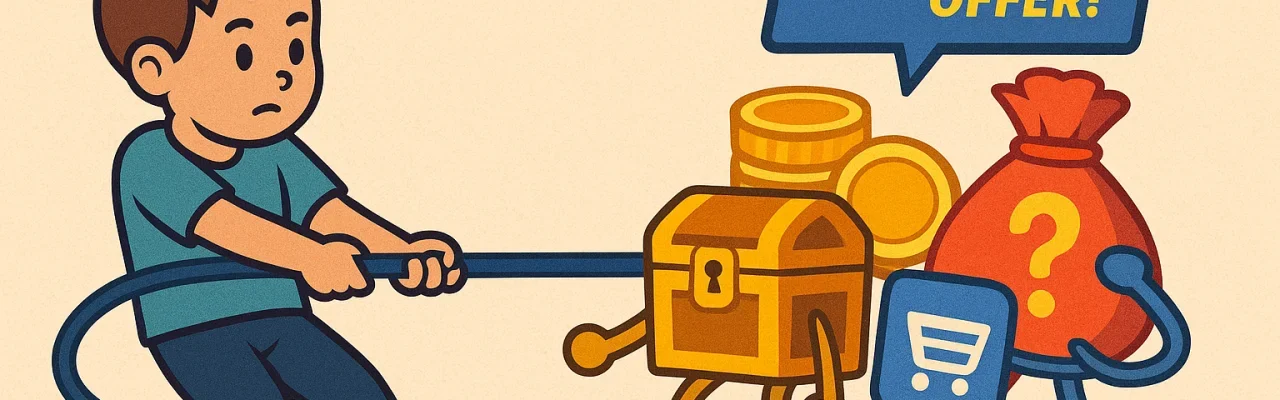
In addition, many games use “urgency tricks”, messages like “Limited Time Offer” or “Only 2 Left!” to make players feel like they have to act fast. ICPEN found that some of these offers were not even real; they were just pressure tactics.

🎮 Even Games for 3-Year-Olds Use These Tricks

What’s perhaps most disturbing is that these manipulative techniques aren’t just in games for teenagers or adults. ICPEN found that:

  • Loot boxes, in-game purchases, and ads are just as common in games rated for ages 3 and up as in other games.
  • Only 30% of games that included loot boxes actually disclosed this in the game’s download page or description.

So not only are our kids exposed to this, we often don’t even know it’s happening.

👨👩👧👦 Our Kids Are Up Against Experts. They Need Us.

As parents, we must face a difficult truth: When our children play these games, they are not just having fun. They are being influenced by teams of professionals, game designers, behavioral scientists, and monetization experts, all working to keep them playing and spending.

It’s not a fair fight. Our kids are just kids. They don’t know how to resist these tactics, and why should they? Even adults often fall into the same traps.

That’s why we, the parents, need to step in.

We must:

  • Know how much time our children spend on screens.
  • Understand what they’re doing during that time.
  • Talk to them openly about what’s okay and what’s not.
  • Help them break habits that lead to addiction or overspending.

🧭 But That’s Easier Said Than Done

The truth is, today’s parents are dealing with challenges that didn’t exist a generation ago. Give a child a smartphone, and in seconds, they can access games, chat with strangers, or be exposed to content we wouldn’t approve of, all from the safety of the living room couch.

You don’t see who they’re talking to. You don’t hear what they’re seeing. And unless you have tools in place, you may not even know how much time they’re online.

🛡️ Digital Parenting Tools Are No Longer Optional

At PureSight , we’ve made it our mission to help families take back control. Not by spying on children, but by giving parents real visibility and the ability to have open, meaningful conversations with their kids.

We believe that:

  • Screen time tracking should be standard in every household.
  • Parents should be able to see what their kids are exposed to, and decide what’s appropriate.
  • And most of all, children deserve to be protected, not manipulated.

This is not about control. It’s about guidance, responsibility, and care.

🔚 We Can’t Change the Whole Digital World – But We Can Change How We Parent in It

The digital world isn’t going away. If anything, it’s only becoming more immersive, more targeted, and more complex.

But that doesn’t mean we’re powerless. It means we must adapt, as parents, as educators, and as a society.

Let’s stop pretending that a simple parental warning or a 3+ age rating is enough. Let’s give our children the tools, support, and protection they need to grow up safe and strong in the digital world.

And let’s start today.

Royi Cohen

CEO @ PureSight | Global expert on Online Child Safety, developing platforms and services for the global market.
Digital Parenting, online child safety, prevention, screen addiction, time limits

Are you a “Sharenter”?

<< All Resources
Share:

Are you posting pictures of your kids’ milestones, your family trips and sharing those cute kid quotes and anecdotes on Facebook, Instagram, YouTube or other social media platforms? If you are, you are creating digital media profiles for your kids. And guess what? You may be guilty of ‘sharenting’…

Sharenting (or oversharenting) is a term used to describe the overuse of social media by parents to share content based on their children.1

Parents are also using social media outlets to receive support and advice for common child rearing dilemmas. Some of the more common issues that are raised are:

  • Getting kids to sleep
  • Eating tips
  • Discipline
  • Behavior problems

Will she be happy that this picture is online when she grows up?

How about some facts?

  1. Many kids already have a “digital identity” before they even start using social media – thanks to their parents’ postings.
  2. Over 50 percent of mothers and some 33 percent of fathers discussed the health of their child and parenting on social media.
  3. About 50 percent of parents were also concerned that when their children grow up they will be embarrassed to see what has been shared about them.
  4. 75 percent of the survey participants pointed to “oversharenting” by other parents, which included sharing location of the child, embarrassing stories related to a child and posting inappropriate stories.2
  5. 70 percent of parents said they used social media to get advice from other parents. 62 % said it helped them worry less.3

Social media outlets are indeed a great place to receive support and advice from other parents who are undergoing or have undergone similar trials. Enough has been said about the “wisdom of the crowds”.

But most parents don’t realize that sharenting can endanger their kids’ privacy and can be excessive and harmful. Here are some examples:

  1. Sharing of unauthorized photos: someone, who you may or may not even know, shares photos of your kids without receiving permission. This may even include “digital kidnapping” where other people steal pictures of your kids and share them as their own children.
  2. Embarrassing pictures/videos: sharing pictures or videos of your kids that could embarrass them when they are older
  3. Personal information: posting personal information about your kids on the web, that will never go away – may be used for cyberbullying or cruel jokes

So what’s a parent to do?

How can we reconcile between the need to protect our children and our need to seek advice and/or show off our darling offspring?
Remember that you are responsible for your child’s privacy, medical information and digital profile. Make sure you understand the importance of what you are sharing about your children so that it doesn’t come back later to haunt them.
In case you are wondering, here are a few suggestions about things you should avoid posting, to avoid potential harassment and bullying from your kids in the future:

In conclusion – the best advice we can give is: use common sense!

digital identity, digital profiles, online child safety, social media

Tips for safe internet use

<< All Resources
Share:

Online activities are an integral part of your children’s lives and they probably spend many of their waking hours surfing the net. Your children use the Internet to study, browse for information, socialize, or play games. These are all constructive activities and there is no doubt that your children can derive tremendous benefits from the Internet.

But that same wonderful environment can very easily become unhealthy and unsafe and even threatening for your children. The increasingly popular social networking sites, instant messaging programs, and chat rooms are just a few potentially dangerous applications that your children probably use regularly. These and others are often misused by sexual predators and cyber bullies who are lurking around the corner, just a few clicks away.

You can’t keep your children off the Internet but you can try to make it a safer place for them, by following a few practical steps that will keep your children safe online.

Discuss!
First of all, discuss the following safe Internet use rules with your children:

  • Use caution with your personal information
    • Avoid publishing your full name, your school name, home address, email address, mobile or home phone numbers and images, where they are easily accessible by others. Use caution especially with social networking sites such as Facebook or MySpace
    • Never give out personal details to online friends you do not know offline
    • Never post anything you wouldn’t want your parents, teachers, or future employers to see
    • Remember that once you post information online, you can’t take it back. Even if you delete the information from a site, older versions exist on other people’s computers
  • Do not share other people’s personal information or say things that might violate the safety or rights of others, even if you mean it as a “joke”
  • Do not share passwords, user names, account IDs or PINs with anyone besides your parents
  • Do not leave mobile phones or other personal electronics (such as a laptop, iPhone, Blackberry, PDA, etc.) unattended
  • Remember there are impersonators out there who lie about their real identity. Someone you meet on the Internet may not be the right person to share your problems with, not to mention meeting with them face to face
  • Never agree to meet someone you only know online without your parents’ consent
  • Never open messages or attachments from someone you don’t know. It could be a virus, or worse – an inappropriate image or film
  • Only add people as friends on social networking sites and instant messaging programs if you know then in real life. Set privacy settings so that you have to approve people to be added as a friend
  • What you do not do in real life, don’t do on the Internet. This includes all kinds of cyber bulling using text, photos and videos
  • Talk to your parents if something feels inappropriate or makes you feel uncomfortable.

Take measures
In addition to discussing the rules with your children, these are a few proactive steps that you can take:

  • Place the computer in an open area in your home – not in your children’s bedroom. But remember that your children have other means of accessing the Internet and communicating with their peers. Pay attention to other computer and Internet-enabled mobile devices.
  • Set clear expectations for your children, based on age and maturity
    • Is there a limited list of websites your children can visit for their school work?
    • Are they allowed to use a search engine?
    • Are they allowed to visit social networking sites such as Facebook and MySpace?
    • Are there sites they are allowed to visit just for fun?
  • Write down the rules and place them next to the computer. Your childrens’ teachers should be able to advise you which sites are appropriate for schoolwork and educational fun
  • Install parental control (content filtering) software, to help you limit the websites your children visit, monitor their online activity, limit the amount of time your children spend online, block file sharing programs and protect them from offensive content or cyber bullies. Pure Sight does all this and moreClick here to find out how.Don’t forget to inform your children that you have done this. Explain to them that that you are not spying on them – you are keeping them safe!
  • Limit and monitor the amount of time your children spend on the Internet, and at what times of day. Too much time online, especially at night, may be a sign of a problem. PureSight can help you do this!
  • Learn Internet basics: If you are not computer savvy, enlist the help of those who are. Learn the basics of the Internet so that your children do not become complacent. Look at blogs and social networking sites to see what children are doing. Go ahead and create your own accounts and play around with it a bit. Get on your children’s friends list
  • Be approachable: try to keep an open communication channel with your children, so that they trust you and feel free to approach and ask you anything or tell you about things that are bothering them. Talk to your children regularly about their online activities.
  • Lead by example. Your children are watching you. Limit your online time and use the Internet and your mobile phone wisely.

If your children are victims of online bullying or aggression, click here to find out what you can do.

online child safety, safe internet use, safe surfing

Organizations

<< All Resources
Share:

As cyberbullying, sexting and other dangers of online life increasingly become a cause for concern for parents, educators, and law enforcement officials, many dedicated organizations have been established with the aim of educating and providing resources for the public. New ones are established all the time.

We’ve collected a list of the leading organizations and government initiatives, for your convenience. It is by no means a comprehensive list, and there are many additional organizations out there, all doing a lot of outstanding work.

Responsible Gambling: Best Practices for UK Bettors

Responsible gambling is a crucial aspect of enjoying the thrill of betting while ensuring the well-being of individuals in the UK betting community. With the rise of online betting platforms and easy access to gambling opportunities, it becomes increasingly important to address the best practices for bettors to engage in a safe and responsible manner. In this article, we delve into the key strategies and guidelines that UK bettors can implement to foster responsible gambling habits and prevent the negative consequences associated with excessive betting.

From setting limits on spending to recognizing warning signs of problem gambling, we explore the tools and resources available to help bettors maintain a healthy relationship with gambling. How can one balance the excitement of placing bets with the need to prioritize responsible behavior? Join us as we navigate through the landscape of responsible gambling practices, empowering UK bettors to make informed decisions and enjoy the world of betting in a safe and sustainable way.

Understanding Responsible Gambling: Key Concepts and Principles

When it comes to gambling responsibly in the UK, there are several best practices that bettors should adhere to in order to maintain a healthy and enjoyable relationship with betting activities. Firstly, setting limits is crucial. This includes both time and money limits. By establishing how much time and money can be spent on gambling each day or week, individuals can prevent overspending and avoid falling into financial difficulties.

Secondly, bettors should be aware of the signs of problem gambling. This includes chasing losses, gambling with money that is needed for essential expenses, and feeling the need to hide gambling activities from friends and family. Recognizing these warning signs early on can help individuals seek help and support before the situation worsens.

Moreover, utilizing tools provided by gambling operators can be beneficial. Features such as deposit limits, self-exclusion, and reality checks can assist bettors in managing their gambling habits effectively. These tools are designed to promote responsible gambling and can be accessed through most online gambling platforms in the UK.

Lastly, seeking help and support is essential for those who feel they may be developing a gambling problem. Organizations such as GamCare and the National Gambling Helpline offer confidential support and advice to individuals struggling with gambling issues. By reaching out for help, bettors can take proactive steps towards regaining control over their gambling behavior and overall well-being.

Setting Limits and Self-Exclusion: Strategies for Managing Risk

When it comes to online betting, responsible gambling is of utmost importance. For UK bettors, adhering to best practices ensures a safe and enjoyable betting experience. One key aspect of responsible gambling is setting limits on both time and money spent on betting activities. By establishing boundaries, bettors can avoid excessive gambling and maintain control over their habits.

Another crucial practice for UK bettors is to regularly review their betting history and track their wins and losses. This helps in identifying any patterns of problem gambling early on. Seeking support from organizations such as GamCare or BeGambleAware is highly recommended for those who feel they may be developing gambling issues. These organizations offer valuable resources and assistance to individuals in need.

Furthermore, UK bettors should always ensure that they are of legal age to participate in gambling activities. It is illegal for individuals under the age of 18 to place bets in the UK. Verifying the legitimacy of online betting platforms is also essential. Bettors should only use licensed and reputable websites like www.betzella.com to safeguard their personal and financial information.

In conclusion, responsible gambling is a shared responsibility between the bettor and the betting operator. By following best practices, UK bettors can enjoy the thrill of betting while minimizing the risks associated with problem gambling. Remember to gamble responsibly and always prioritize your well-being and enjoyment while engaging in betting activities.

Recognizing Problem Gambling: Early Signs and Intervention

Responsible gambling is essential for UK bettors to ensure a safe and enjoyable betting experience. One of the best practices is setting limits on both time and money spent on gambling activities. Establishing a budget and sticking to it helps prevent overspending and potential financial difficulties. Bettors should also avoid chasing losses and be mindful of their emotions while gambling, ensuring that decisions are made rationally rather than impulsively.

Another key aspect of responsible gambling is knowing when to take a break. Taking regular breaks during gambling sessions can help prevent excessive and harmful behaviors. Additionally, seeking support from resources such as the National Gambling Helpline can provide guidance and assistance for those struggling with gambling-related issues. By following these best practices, UK bettors can engage in gambling activities responsibly and minimize the risks associated with problem gambling.

Leveraging Support Services: Resources for Responsible Betting

When it comes to gambling responsibly in the UK, there are several best practices that bettors should follow to ensure a safe and enjoyable experience. Firstly, setting limits is crucial. This includes both time and money limits to avoid overspending or becoming too engrossed in gambling activities. By establishing clear boundaries before starting to gamble, individuals can better control their behavior and avoid potential negative consequences.

Another important practice is to stay informed about the risks associated with gambling. Understanding the odds, potential outcomes, and the impact of gaming on mental health is essential for making informed decisions. Bettors should educate themselves about responsible gambling practices and seek help if they feel their habits are becoming problematic. Resources such as the BeGambleAware website offer valuable information and support for individuals struggling with gambling-related issues.

Lastly, seeking help and support is vital for UK bettors who may be experiencing difficulties with their gambling habits. Whether through counseling services, helplines, or support groups, there are numerous avenues for individuals to get the assistance they need. Recognizing the signs of problem gambling early and reaching out for help can make a significant difference in managing and overcoming gambling addiction.

Promoting Responsible Gambling Culture: Industry Initiatives and Regulations

Responsible gambling is crucial for ensuring a safe and enjoyable betting experience for UK bettors. One of the best practices for responsible gambling is setting limits on both time and money spent on betting activities. By establishing a budget and sticking to it, bettors can avoid financial strain and potential addiction.

Another important practice is to be aware of the signs of problem gambling. This includes chasing losses, betting with money that is needed for essential expenses, and feeling the need to gamble more frequently. Recognizing these warning signs early on can help bettors seek help and support before the issue escalates.

Utilizing the self-exclusion tools provided by gambling operators is also a key practice for responsible gambling. Bettors can choose to self-exclude from gambling websites and establishments for a set period, helping them take a break and regain control over their betting habits.

Lastly, staying informed about responsible gambling resources and support services is essential. Organizations such as GamCare and BeGambleAware offer helplines, counseling services, and resources for those struggling with gambling addiction. By seeking help when needed and educating themselves on responsible gambling practices, UK bettors can enjoy a safer and more sustainable betting experience.

As responsible gambling becomes an increasingly important topic in the UK, it is crucial for bettors to adopt best practices to ensure a safe and enjoyable experience. By setting limits, staying informed about gambling regulations, and seeking support when needed, individuals can engage in gambling activities responsibly. Remember, gambling should be a form of entertainment, not a financial burden. By following these guidelines and being mindful of one’s behavior, UK bettors can contribute to a healthier gambling environment for themselves and others.

Organization:
Childnet International

Activity:
Childnet International’s mission is to work in partnership with others around the world to help make the Internet a great and safe place for children.

Website:
KidsSmart, educational website, for parents and kids, information about Childnet, news, projects, general safety advice for parents, young people and teachers, links and other information.

Organization:
Connect Safely

Activity:
Information for parents, teens, educators, advocates about the Social web and safe, civil use of Web 2.0.

Website:
News, safety tips and advice, forum, videos.

Organization:
Cyberbully 411

Activity:
Resources for youth who have questions about or have been targeted by online harassment. The website was created by Internet Solutions for Kids, Inc with funding from the Community Technology Foundation of California.

Website:
Information about cyberbullying for youth: what it is, who does it, what to do, and a forum for sharing stories.

Organization:
Cyberbullying.org

Activity:
Information, examples, what can be done, facts and figures and other resources about cyberbullying.

Website:
From the home of www.bullying.org a comprehensive resource about all aspects of bullying.

Organization:
Cyberbullying Research Center

Activity:
Information and research about the nature, extent, causes, and consequences of cyberbullying among adolescents.

Website:
News, tips, blog, events, research, publications, presentations, resources, videos.

Organization:
CyberSmart

Activity:
Developed by the Australian Communications and Media Authority, Cybersmart is part of the Australian Government’s cybersafety program.

Website:
Activities, resources and practical advice for young kids, kids, teens and parents as well as training and resources for schools and materials for library staff.

Organization:
End to Cyber Bullying” (ETCB)

Activity:
A NY state certified, non-profit organization founded by Samuel Lam and David Zhao, in the hopes of creating a social networking world devoid of cyberbullying. By raising awareness, ETCB hopes to help teens, parents, educators, and others to identify, prevent, and ultimately stop cyberbullying.

Website:
Information about cyberbullying and cyberbullying prevention for teens, parents and educators.

Organization:
Enough is Enough

Activity:
An International, non-profit membership organization that identifies and promotes best practice, tools and methods in the field of online safety, through the development of public policy, technology, education and special events.

Website:
Information about the organization, membership, upcoming events, resources for parents and professionals, news.

Organization:
FOSI – Family Online Safety Institute

Activity:
An International, non-profit membership organization that identifies and promotes best practice, tools and methods in the field of online safety, through the development of public policy, technology, education and special events.

Website:
Information about the organization, membership, upcoming events, resources for parents and professionals, news.

Organization:
Get Safe Online

Activity:
Sponsored by the UK Government, Microsoft and several other organizations, as part of a national campaign.

Website:
Information on protecting your computer and staying safe online, tips, videos, guides, etc.

Organization:
GetNetWise

Activity:
A public service by Internet industry corporations and public interest organizations to help ensure that Internet users have safe, constructive, and educational or entertaining online experiences.

Website:
Blog, tutorials on internet safety, glossary of internet terms, FAQs, safety guide, tools, web sites for kids, information about fighting spam.

Organization:
I Keep Safe Internet Keep Safe Coalition

Activity:
The Internet Keep Safe Coalition is a partnership of governors and/or first spouses, attorneys general, public health and educational professionals, law enforcement, and industry leaders working together for the health and safety of youth online.

Website:
Resources for parents, activities and information for kids, resources for educators -from elementary through high school aged kids , videos, and an online store for purchasing brochures, flyers, books, specialty items and more.

Organization:
ICAC – Internet Crimes Against Children

Activity:
The ICAC Task Force Program was created to help State and local law enforcement agencies enhance their investigative response to offenders who use the Internet, online communication systems, or other computer technology to sexually exploit children. The program is currently composed of 61 regional Task Force agencies and is funded by the United States Office Of Juvenile Justice and Delinquency Prevention.

Website:
Resources and information about training programs.

Organization:
Insafe

Activity:
A European network of Awareness Centers promoting safe, responsible use of the Internet and mobile devices to young people.

Website:
Blog, events, information for children, parents and teachers, National Awareness Centers, hotlines, report illegal content.

Organization:
Internet Matters.org

Activity:
An independent, not-for-profit organisation to help parents keep their children safe online

Website:
Age guides, information about cyberbullying. sexting, online porn, technologies and articles for further reading

Organization:
Internet Solutions for Kids

Activity:
A non-profit research organization in the US centered on understanding the impact on and opportunities for adolescent health represented by new technologies.

Website:
News, Publications such as: “Child and Adolescent Internet Use and Health”, information about projects, presentations, and additional information for parents.

Organization:
ISafe

Activity:
i-SAFE Inc. a U.S. Congress endorsed non-profit foundation dedicated to online child safety. i-SAFE incorporates classroom curriculum with community outreach to empower students, teachers, parents, law enforcement, and adults.

Website:
Information for kids and teens, educators, parents and law enforcement. Training modules.

Organization:
Keep Children Safe Online

Activity:
A non-profit organisation aimed at parents, teachers and children to help further educate them on the importance of internet safety. The organization aims to provide resources, raise awareness and secure funding for organisations in this area.

Website:
Special areas for kids, adults and teachers, with educational materials about internet safety.

Organization:
LMK Life Online

Activity:
Created by Girl Scouts of the USA and Microsoft Windows to empower young people so they can educate others on the reality of being a teen online and help adults understand the real issues that affect teens every day.

Website:
Information mostly for teens (and some for parents) about the following online safety topics: social networking, online sexual predators, cyber security, cyber bullying, and mobile devices. LMK stands for Let Me Know.

Organization:
Netsafe

Activity:
An independent non-profit organization in New Zealand that promotes confident, safe, and responsible use of Cyberspace.

Website:
Net basics, a parent’s guide to cyberbullying, information about cyberbullying for young people, parents and teachers, research and development, and more.

Organization:
NetSmartz

Activity:
An interactive, educational safety resource from the National Center for Missing & Exploited Children (NCMEC) and Boys & Girls Clubs of America (BGCA) for children aged 5 to 17, parents, guardians, educators, and law enforcement that uses age-appropriate, 3-D activities to teach children how to stay safer on the Internet.

Website:
Presentations, activities, links and information for parents, educators, law enforcement, teens and kids.

Organization:
Safe Families

Activity:
A program that was formed to assist parents in protecting their children from pornography and other dangers on the Internet. Religious orientation.

Website:
Tutorials and resources for parents and Pastors, news.

Organization:
Safekids

Activity:
One of the oldest and most enduring sites for Internet safety. Created by known internet safety advocate, Larry Magid.

Website:
Safety advice, tools and tips.

Organization:
Stay Safe Online

Activity:
The National Cyber Security Alliance’s Website. Content on the Website is developed in cooperation with government, industry, non-profit and education partners.

Website:
Educational materials, information for home users on protecting their computers and their children, cyber security practices, videos, self assessment quiz, and additional information.

Organization:
Stop Cyberbullying

Activity:
Created by the Illinois Attorney General, to promote Internet Safety.

Website:
Information for kids & teens, parents, and educators about cyberbullying, cyberbullying quiz, news & events, FAQs, and basic Internet terms.

Organization:
StopCyberbulling

Activity:
Operated by Wired Safety, this specific website is intended for kids between the ages of 7 and 17 and is dedicated to cyber bullying.

Website:
Information about cyberbullying, prevention, taking action for kids in the following age groups: 7-1o, 11-13, 14-17

Organization:
Teen Angels

Activity:
Site is maintained by a group of 13 to 18 year old volunteers specially trained in all aspects of online safety, privacy and security. The Teenangels run unique programs in schools to spread the word about responsible and safe surfing to other teens and younger kids, parents, and teachers. Sponsored by Wired Safety.

Website:
Information on becoming a teenangel and their activities, information about various internet safety issues such as cyberbullying and social networks, information for parents, schools, events and more.

Organization:
The Center for Safe and Responsible Internet Use (CSRIU)

Activity:
Research and outreach services for parents, educators, librarians, policy-makers, and others regarding effective strategies to assist young people in gaining the knowledge, skills, motivation, and self-control to use the Internet and other information technologies in a safe and responsible manner.

Website:
Reports and articles, resources and information for education professionals, blog by internet safety expert Nancy Willard, director of the center.

Organization:
Wired Safety

Activity:
Led by Internet privacy and security lawyer, Dr. Parry Aftab, Wired Safety claims to be “the world’s largest Internet safety, help and education resource”. Wired safety also operates TeenangelsTweenangelsWiredKidsCyberLawEnforcement and StopCyberbullying.

Website:
Information and resource for kids, tweens and teens, parents, educators and law enforcement, FAQs, self help presentations for youth and adults, newsletter, surveys and polls.

Organization:
Wise Kids

Activity:
A nonprofit company, founded in 2002, provides training programs and consultancy in New Media, Internet and Mobile Technologies, Internet Proficiency, Literacy and Safety.

Website:
Resources, links, tips and activities for young people, parents, communities, educators and businesses.


online child safety, organizations

Is my child ready for Facebook?

<< All Resources
Share:

“Mom, don’t you know that ALL my friends have Facebook accounts!! Can I have one?”

“Dad, how will I know what’s going on with my friends if I’m not on Facebook?!?”

Let’s face it – social media has become a major part of the way we all communicate, children included. It offers a way to stay in touch with family and friends who live far away. And with the increasing availability and use of smart phones, tablets, computers and the Internet along with the popularity of social media sites, such as Facebook, LinkedIn, Foursquare, Pinterest, Twitter and more—we can access almost anyone, anywhere.

Ontdekken van Niche Sportweddenschappen in Nederland

In Nederland is de wereld van sportweddenschappen een populaire en dynamische industrie. Terwijl velen bekend zijn met traditionele sportweddenschappen zoals voetbal en tennis, zijn niche sportweddenschappen in opkomst. Het ontdekken en verkennen van deze minder bekende sporten biedt niet alleen nieuwe mogelijkheden voor gokliefhebbers, maar opent ook de deur naar unieke en opwindende weddenschapservaringen.

In dit artikel duiken we dieper in op het fenomeen van niche sportweddenschappen in Nederland. Van obscure sporten tot opkomende competities, we zullen verkennen hoe deze nichemarkt evolueert en welke kansen het biedt voor zowel gokkers als weddenschapsplatforms. Ben jij klaar om de traditionele gokwereld te verlaten en je te begeven in de opwindende wereld van niche sportweddenschappen? Lees verder om te ontdekken hoe je jouw gokervaring naar nieuwe hoogten kunt brengen!

Opkomst van Niche Sportweddenschappen in Nederland

In Nederland groeit de populariteit van sportweddenschappen gestaag. Naast de bekende sporten zoals voetbal en tennis, begint ook de interesse in niche sportweddenschappen toe te nemen. Deze nichesporten bieden unieke kansen voor zowel bookmakers als gokkers om nieuwe markten te verkennen en te benutten.

Een van de opkomende niche sportweddenschappen in Nederland is bijvoorbeeld eSports. Met de groeiende populariteit van gaming en eSports-evenementen over de hele wereld, ontdekken steeds meer mensen de spanning van het wedden op professionele gamingcompetities. Dit opent de deur naar een geheel nieuwe doelgroep voor de gokindustrie.

Naast eSports zijn er ook andere niche sportweddenschappen zoals darts, snooker, en zelfs surfen die langzaam maar zeker terrein winnen in Nederland. Voor liefhebbers van deze sporten bieden de opkomende mogelijkheden om te wedden op hun favoriete evenementen een boeiende en verfrissende ervaring. Het ontdekken van deze niche sportweddenschappen voegt een extra dimensie toe aan de algehele gokervaring in Nederland.

Invloed van Digitalisering op Niche Sportweddenschappen

In Nederland groeit de interesse in niche sportweddenschappen gestaag. Steeds meer mensen ontdekken de opwinding en potentie van weddenschappen op minder bekende sporten. Een handige bron voor het verkennen van deze niche markt is winstwijzer.com. Deze website biedt waardevolle informatie en tips voor het succesvol inzetten op diverse sportevenementen.

Met een groeiende populariteit van niche sportweddenschappen, is het belangrijk om goed geïnformeerd te zijn over de verschillende mogelijkheden en strategieën. Winstwijzer.com fungeert als een gids die spelers helpt bij het begrijpen van de nuances van het wedden op minder gangbare sporten. Door gebruik te maken van de expertise en analyses op de website, kunnen wedders hun kansen op winst vergroten.

Door het ontdekken van niche sportweddenschappen in Nederland kunnen spelers profiteren van unieke kansen en hogere potentiële uitbetalingen. Winstwijzer.com biedt inzicht in diverse nichesporten en toernooien, waardoor wedders hun horizon kunnen verbreden en nieuwe strategieën kunnen ontwikkelen. Met de juiste kennis en begeleiding kunnen spelers succesvol zijn in deze specifieke tak van sportweddenschappen.

De opkomst van niche sportweddenschappen in Nederland opent de deur naar een spannende en lucratieve wereld voor liefhebbers van zowel sport als gokken. Met winstwijzer.com als betrouwbare bron van informatie en advies, kunnen wedders hun vaardigheden aanscherpen en meer winstgevende beslissingen nemen in deze groeiende markt.

Regulering en Wetgeving omtrent Niche Sportweddenschappen

In Nederland groeit de populariteit van sportweddenschappen gestaag. Naast de traditionele sporten zoals voetbal en tennis, is er een groeiende belangstelling voor niche sportweddenschappen. Dit omvat weddenschappen op minder bekende sporten zoals handbal, wielrennen, en zelfs e-sports. Het ontdekken en verkennen van deze niche sportweddenschappen opent nieuwe mogelijkheden voor zowel bookmakers als gokkers.

Een van de voordelen van het verkennen van niche sportweddenschappen is de potentieel hogere winstgevendheid. Omdat deze sporten minder mainstream zijn, zijn de quoteringen vaak gunstiger. Dit betekent dat gokkers meer kunnen winnen met lagere inzetten in vergelijking met populaire sporten. Door de diversificatie van weddenschappen en het begrijpen van de nichemarkten kunnen gokkers hun winstkansen vergroten.

Bovendien bieden niche sportweddenschappen een unieke en verfrissende gokervaring. Het wedden op minder bekende sporten kan opwinding en spanning toevoegen aan de gokervaring, vooral voor diegenen die op zoek zijn naar nieuwe uitdagingen. Daarnaast kan het verkennen van niche sportweddenschappen gokkers helpen om hun kennis en begrip van verschillende sporten te verbreden.

Met de opkomst van online gokplatforms wordt het ontdekken van niche sportweddenschappen in Nederland gemakkelijker dan ooit. Gokkers kunnen profiteren van een breed scala aan sporten en evenementen om op te wedden, waardoor de gokindustrie steeds diverser en inclusiever wordt. Door open te staan voor nieuwe mogelijkheden en het verkennen van niche sportweddenschappen, kunnen gokkers een boeiende en lucratieve gokervaring beleven.

Populariteit en Groeipotentieel van Niche Sportweddenschappen in Nederland

In Nederland groeit de populariteit van sportweddenschappen gestaag, met een toenemend aantal mensen die op zoek zijn naar nieuwe en opwindende manieren om te wedden. Een interessante ontwikkeling binnen deze branche is het ontdekken van niche sportweddenschappen. Dit houdt in dat mensen hun inzetten plaatsen op minder bekende sporten of evenementen, waardoor ze nieuwe mogelijkheden en uitdagingen kunnen verkennen.

Door het ontdekken van niche sportweddenschappen kunnen gokliefhebbers in Nederland een geheel nieuwe wereld betreden, waarbij ze hun kennis en vaardigheden kunnen testen op gebieden die minder mainstream zijn. Dit kan variëren van sporten zoals schaken, darts of zelfs e-sports, tot specifieke lokale evenementen die normaal gesproken minder aandacht krijgen in de traditionele gokwereld.

Het verkennen van niche sportweddenschappen biedt niet alleen nieuwe kansen voor gokkers, maar ook voor bookmakers en online platforms die deze nichemarkten kunnen benutten. Door een breed scala aan sportweddenschappen aan te bieden, kunnen aanbieders hun klantenbestand vergroten en tegelijkertijd een unieke en gepersonaliseerde gokervaring bieden.

Al met al biedt het ontdekken van niche sportweddenschappen in Nederland een boeiende en innovatieve benadering van de gokindustrie, waarbij spelers worden aangemoedigd om buiten de gebaande paden te treden en nieuwe avonturen aan te gaan. Met een groeiende interesse in deze nichemarkten, kunnen zowel gokkers als aanbieders profiteren van de diversiteit en opwinding die deze unieke vorm van weddenschappen met zich meebrengt.

Marketingstrategieën voor Niche Sportweddenschappen in de Nederlandse markt

In Nederland groeit de populariteit van sportweddenschappen gestaag, maar een interessante ontwikkeling is het ontdekken van niche sportweddenschappen. Steeds meer mensen raken geïnteresseerd in het wedden op minder bekende sporten zoals darts, snooker, en zelfs e-sports. Deze niche sportweddenschappen bieden een unieke kans voor zowel bookmakers als gokkers om nieuwe mogelijkheden te verkennen en te profiteren van kansen die traditionele sportweddenschappen misschien niet bieden.

Door het ontdekken van niche sportweddenschappen in Nederland krijgen liefhebbers de kans om hun kennis en passie voor minder populaire sporten te benutten. Het wedden op deze nichesporten kan een spannende ervaring zijn, omdat het vaak meer diepgaande kennis vereist en hogere potentiële uitbetalingen kan opleveren. Met de groeiende interesse in niche sportweddenschappen wordt de gokmarkt in Nederland diverser en boeiender, en biedt het zowel beginners als ervaren gokkers nieuwe mogelijkheden om hun geluk te beproeven.

Al met al biedt het ontdekken van niche sportweddenschappen in Nederland een boeiende en lucratieve mogelijkheid voor liefhebbers van gokken. Door de diversiteit aan sporten en weddenschappen die beschikbaar zijn, kunnen spelers een unieke en spannende ervaring beleven. Met een groeiende markt en toenemende interesse in niche sporten, is het een opwindende tijd om deze wereld te verkennen. Of je nu een doorgewinterde gokker bent of gewoon op zoek bent naar iets nieuws, de wereld van niche sportweddenschappen heeft voor elk wat wils.

We all know that social media sites are great for building existing relationships and creating new ones – that’s on the positive side. But along with the benefits come the concerns – your children could be unknowingly putting themselves in harm’s way by posting personal information or compromising images, by agreeing to interact with potentially harmful contacts and worst of all, they could potentially be exposing themselves to cyberbullying – online bullying, which according to recent studies, most often happens between friends!

So, probably a lot sooner than you expected , you are facing yet another parenting dilemma – should you allow your child to have a Facebook or (any other social media) account?

Is your child under the age of 13?

You should be aware that if your child is under the age of 13, if they create a Facebook account, it is in direct violation of the Facebook Terms and Conditions, which clearly state “you will not use Facebook if you are under the age of 13.” The only way to actually create a Facebook account is to lie about your child’s age, if you do so, you are teaching them a lesson – lying is OK.

So how will I know if it’s time?

These basic points will help you decide if your children are ready for social networking, and if you are ready for them to be there.

  1. Computer literacy: Most kids are more knowledgeable about computers than their parents, but for those who aren’t – make sure they know their way around a computer and the internet before opening an account. Ask yourself – do you know enough to be able to guide them?
  2. Social Networking proficiency: Are you yourself familiar enough with social networking sites to be able to teach your kids how to safely use them?
  3. Time and energy: Are you ready to be actively involved? You need to be there, hovering over their shoulders, so to speak, guiding, explaining, monitoring. That’s quite a commitment. Are you ready to invest the time and energy needed? (And get used to seeing POS written in their chat – it means Parent Over Shoulder).
  4. Danger awareness: Are you ready to help your kids understand the potential risks and dangers, such as cyberbullying and sexting, so they are well informed and prepared?
  5. Open communication: Do you have a good relationship with your kids? Are you able to maintain open, honest, and frequent communication with your children? This is critical as your children should feel comfortable enough to talk to you about any problem or discomfort they experience.
  6. Right vs. wrong: Are your kids emotionally mature and responsible enough? Can they understand the difference between appropriate and destructive on line behavior? Are they capable of practicing Facebook and internet etiquette?

You’ve decided the time has come, your kids are ready…

Once you decide your kids are ready to handle the world of social media, it is important to set up guidelines or rules for use. Will there be set times for Facebook use? Will you have to approve new friends? What types of things are appropriate to include on a status update? Are children allowed to upload photos? Should parents approve first? Will parents have the password to the Facebook account? At what point will Facebook use be suspended?

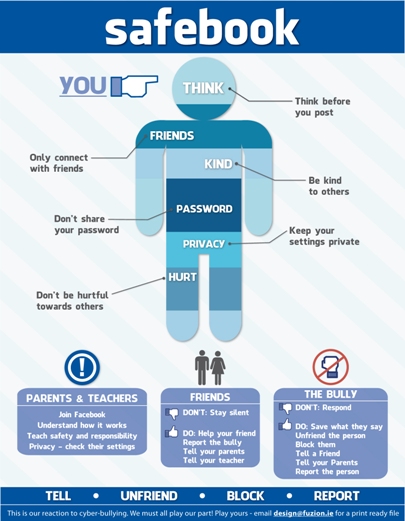
And for some basic Facebook safety rules check out the following infographic:

PureSight helps you keep your kids safe!

With PureSight you can easily limit your kids’ online time, and create separate age-appropriate profiles for each one of your children.

See Features >

Facebook, online child safety, social media

Games and Activities

<< All Resources
Share:

If your kids are like most they kids enjoy playing computer and online games. These can be a great way to help teach your kids about the dangers of online life such as cyberbulllyingsexting, and online predators, and about the ways they can protect themselves.

There are many games and activities available online, and we’ve listed several here for your use. It’s probably a good idea to look at them before you let your children do them, so you know what your kids can learn from each activity. Depending on your kids’ ages, it may also be nice to do them together, as a parent-child activity.

Economic Benefits of Gambling to the Canadian Economy

Canada’s gambling industry has long been a subject of debate, with proponents and critics offering contrasting views on its economic impact. In recent years, the discussion has shifted towards examining the tangible benefits that gambling brings to the Canadian economy. From job creation to increased tourism revenue, the economic implications of the gambling industry are vast and multifaceted. In this article, we delve into the economic benefits of gambling to the Canadian economy, exploring how this controversial industry plays a significant role in shaping the country’s financial landscape.

As we navigate through the complexities of gambling’s economic impact, we will uncover key arguments that shed light on its contributions to Canada’s financial well-being. Beyond the glitz and glamour of casinos, there lies a network of economic opportunities that trickle down to various sectors of the economy. How does gambling fuel economic growth? What are the implications of increased government revenue from gambling activities? Join us on this journey as we unravel the layers of Canada’s gambling industry and its profound effects on the nation’s economy.

Contribution of the Gambling Industry to Canadian GDP

One significant economic benefit of gambling to the Canadian economy is the substantial revenue it generates for both the government and private sector. The taxes collected from casinos, lotteries, and other forms of gambling contribute a significant amount to the national budget, funding various public services and infrastructure projects. This revenue also helps to create jobs and stimulate economic growth across different regions of Canada.

Furthermore, the gambling industry in Canada attracts a large number of tourists, both domestically and internationally. Tourists visiting Canadian casinos and resort destinations contribute to the economy through spending on accommodation, dining, entertainment, and shopping. This influx of tourism not only boosts local businesses but also supports job creation in the hospitality and tourism sectors, enhancing overall economic activity.

Lastly, online gambling platforms like casimatic.com play a role in driving the Canadian economy by providing a convenient and accessible way for people to participate in gambling activities. These platforms create opportunities for Canadian businesses to innovate and expand their reach globally, contributing to the country’s reputation as a hub for technological advancements in the gambling industry. The digitalization of gambling also opens up new avenues for revenue generation and job creation in the digital economy.

Job Creation and Employment Opportunities in the Gambling Sector

One significant economic benefit of gambling to the Canadian economy is the substantial revenue generated through various gambling activities. This revenue comes in the form of taxes, licensing fees, and other contributions from the gambling industry to government coffers. These funds are then utilized for public services such as healthcare, education, infrastructure development, and social programs, ultimately benefiting Canadian citizens and the economy as a whole.

Additionally, the gambling industry in Canada creates numerous job opportunities, ranging from casino staff to management positions, as well as roles in marketing, finance, and hospitality. The employment generated by the gambling sector helps reduce unemployment rates and boosts consumer spending, further stimulating economic growth. Moreover, these jobs often come with competitive salaries and benefits, contributing to the overall prosperity of Canadian households.

Furthermore, the tourism industry in Canada benefits significantly from gambling establishments, attracting both domestic and international visitors. Casinos, racetracks, and other gambling venues serve as major tourist attractions, leading to increased spending on accommodations, dining, entertainment, and other related services. This influx of tourism not only boosts local businesses but also promotes economic development in various regions across Canada, fostering a thriving and diversified economy.

Tax Revenue Generated from Gambling Activities

One of the significant economic benefits of gambling to the Canadian economy is the revenue generated through various forms of gambling activities. Casinos, lotteries, and other gaming establishments contribute a substantial amount of money to the government in the form of taxes and licensing fees. This revenue is then used to fund public services such as healthcare, education, and infrastructure development, benefiting the entire population.

Furthermore, the gambling industry in Canada creates employment opportunities for thousands of people across the country. From casino staff to game developers to marketing professionals, the sector provides a wide range of jobs that help stimulate economic growth and reduce unemployment rates. Additionally, the tourism industry also benefits from gambling, as many visitors are attracted to Canada specifically for its casinos and gaming facilities, bringing in additional revenue and supporting local businesses.

Economic Stimulus through Tourism and Entertainment

One significant economic benefit of gambling to the Canadian economy is the generation of substantial tax revenues. The government collects significant amounts from taxes on gambling activities, including lotteries, casinos, and sports betting. These revenues contribute to funding various public services such as healthcare, education, and infrastructure development. In turn, this helps to alleviate the tax burden on citizens and supports economic growth.

Another key benefit is the creation of employment opportunities within the gambling industry. Casinos, racetracks, and other gambling establishments provide jobs for a large number of Canadians, ranging from dealers and croupiers to management and administrative positions. The industry also supports jobs in related sectors such as hospitality, tourism, and entertainment. This employment not only boosts household incomes but also drives consumer spending and economic activity.

Furthermore, gambling attracts tourism to Canada, particularly to popular destinations like Niagara Falls and Vancouver. Tourists are drawn to the diverse gambling options available, from world-class casinos to horse racing tracks. The influx of visitors leads to increased spending on accommodation, dining, shopping, and entertainment, benefiting local businesses and stimulating the economy. Additionally, gambling tourism helps to promote Canada as a desirable destination, enhancing its global reputation and attracting more international visitors.

Lastly, the gambling industry contributes to innovation and technological advancement in Canada. As the sector evolves, there is a growing emphasis on developing cutting-edge gaming technologies, online platforms, and mobile applications. This drive for innovation not only enhances the overall gambling experience for consumers but also fosters growth in the tech sector, creating opportunities for Canadian companies to lead in the development of gaming software and solutions.

Social Programs Supported by Gambling Revenues

Gambling plays a significant role in contributing to the Canadian economy through various economic benefits. One of the key advantages is the generation of substantial revenue for both the government and local communities. Tax revenues derived from gambling activities, such as lotteries, casinos, and sports betting, contribute to funding essential public services like healthcare, education, and infrastructure development. This revenue stream helps reduce the reliance on other forms of taxation, ultimately benefiting Canadian citizens through improved public services and facilities.

Furthermore, the gambling industry in Canada creates employment opportunities across various sectors, including hospitality, entertainment, and tourism. Casinos, racetracks, and other gambling establishments provide jobs for a diverse range of individuals, from dealers and customer service staff to marketing and management professionals. These employment opportunities help stimulate economic growth, increase consumer spending, and drive innovation within the industry. Additionally, the presence of gambling establishments attracts tourists, both domestic and international, boosting the hospitality sector and contributing to the overall economic prosperity of Canada.

Overall, the economic benefits of gambling to the Canadian economy are significant and wide-reaching. From job creation and increased tax revenue to funding important social programs, the impact of the gambling industry cannot be understated. As a major contributor to tourism and entertainment sectors, casinos and gaming facilities play a vital role in driving economic growth and development across the country. Despite some concerns about social implications, the positive financial effects of gambling are undeniable, making it a key player in Canada’s economic landscape.

Elementary school aged kids (First through Sixth grade)

Organization/Website
ikeepsafe

Activity
My world and internet safety

Comments
An introduction to the need for internet safety. PDF to be printed out.

Organization/Website
ikeepsafe

Activity
I know the safety rules

Comments
Children learn about the safety rules. PDF to be printed out.

Organization/Website
Safekids

Activity
Online safety quiz

Comments
For kids who can read, kids are asked to answer questions about potential online dangers (is it ok to send a picture of myself to someone I’ve met online?)The Online Safety Quiz is your chance to show that you know how to be a safe Internet surfer.

Organization/Website
Power to Learn

Activity
Get certified internet smart

Comments
If quiz is completed successfully kid receives certificate with his name on it. Interface not very friendly for younger kids. Parents should work with kids on this one.

Organization/Website
Woogiworld

Activity
WoogiWorld

Comments
A virtual social network, created to teach children to safely and effectively use the Internet. Requires registration with parent approval.

Organization/Website
Internet Safety Colorado

Activity
NetSmartz Activities

Comments
20 page booklet with a variety of activities: crossword puzzle (“test your netsmartz”), find the hidden words, word scramble, find the hidden words, and more. Answers at the end.

Organization/Website
Media awareness

Activity
Are you web aware?

Comments
A check list for kids ages 9-12. Nice way to initiate a discussion with your kids about web awareness.

Organization/Website
Council of Europe

Activity
Wild Web Woods

Comments
Online game about internet safety.

Organization/Website
Kids.com

Activity
Internet safety game

Comments
Complete the sentences about safe and polite online behavior.

Organization/Website
PBS

Activity
Get your web license

Comments
Kids answer questions about legitimate web behavior and receive a web license for their efforts.

Organization/Website
Bizzkid

Activity
Sid’s online safety guide

Comments
Sid’s Online Safety Guide includes fun games and activities that provide a sustainable way of reinforcing Internet Safety to primary school children.

Organization/Website
WiredKids

Activity
Have you ever been cyberbullied?

Comments
Kids answer an online quiz to find out if they’ve been cyberbullied.

Organization/Website
NetSmartzKids

Activity
Games

Comments
A selection of games, some are pure fun, others teach about online safety. The selected game appears at the top of the screen.

Organization/Website
Cyber(smart:)

Activity
Hector’s World

Comments
Hector helps his friends use their computers, the internet and mobile phones the cybersmart way. Puzzles, stories, videos and activities.

Organization/Website
Pennsylvania Attorney General

Activity
Just4kids

Comments
Activities, quiz, matching game, crossword puzzle and more.

Organization/Website
BSA

Activity
Play it cybersafe

Comments
Cyber safety games for kids.

Organization/Website
McGruff

Activity
Games

Comments
A variety of online games for kids.

Middle school aged kids and up (Seventh grade and up)

Organization/Website
Cyberbullying Research Center

Activity
Cyberbullying crossword puzzle

Comments
Includes word bank and answers. PDF to be printed out.

Organization/Website
Cyberbullying Research Center

Activity
Cyberbullying word find

Comments
Includes word bank. PDF to be printed out.

Organization/Website
Power to Learn

Activity
Get certified internet smart

Comments
If quiz is completed successfully kid receives certificate with his name on it.

Organization/Website
Safety Clicks

Activity
Online Safety IQ Challenge

Comments
Online quiz with feedback on answers and links to detailed explanations.

Organization/Website
Cyberbullying.info

Activity
Interactive journey to learn about cyberbullying

Comments
An interactive journey through a detective’s office to learn about cyberbullying. Users hunt and explore their way through a fun website uncovering clues and information about cyberbullying and how to recognize what to do.

Organization/Website
Need to Know

Activity
Cyberbullying quiz

Comments
Online quiz about cyberbullying.

Organization/Website
Bullying UK

Activity
The Oracle

Comments
Hi-tech artificial intelligence bullying advice service. Young people answer questions. If a person is unsure of the answer to give they can use the drop down menu to select the most common answer to the current question. As The Oracle learns more about the problem it will start to deliver advice and continue to ask more questions while delivering more advice. On completing a session with The Oracle the user is presented with a roundup of all the advice given.

Organization/Website
Media awareness

Activity
Are you web aware?

Comments
A check list for kids ages 13-17. Nice way to initiate a discussion with your teens about web awareness.

Organization/Website
Texted.ca

Activity
textED

Comments
A variety of games and activities to help learn about texting and textual relationships.

Organization/Website
National Center for Missing and Exploited Children

Activity
Internet Safety Quiz

Comments
Online quiz. Kids can check their answers and learn from mistakes.

Organization/Website
Pennsylvania Attorney General

Activity
Operation Safe Surf for Middle Schoolers

Comments
Tips, games and activities to promote safe surfing.

Organization/Website
Pennsylvania Attorney General

Activity
Operation Safe Surf for Teens

Comments
Interactive games.

Organization/Website
Cyber tip line

Activity
Id the creep

Comments
Game to help teen recognize the dangers of email, chat or IM and identify someone with bad intentions.

activities, games, online child safety
Don’t wait, Schedule Puresight demo today!