Some viral challenges rely on speed or surprise. This one relies on pain. In the Hot Tea Challenge, also called a loyalty check, people pour very hot tea over joined hands and watch who pulls away first.
At first, teens may treat the clip like a relationship test or prank. However, the challenge sends a harmful message: staying in pain proves love, loyalty, courage, or trust. Therefore, parents should view it as both a burn risk and a pressure-based online behavior.
What the Video Usually Shows
The format usually starts with two people holding hands. Next, someone pours hot or boiling tea over them. Then viewers wait to see who reacts first. Some posts frame the moment as a couple challenge, while others present it as a friendship test or dare.
Because the video looks short, teens may miss the real outcome. Hot liquid can injure skin within seconds. In addition, the clip may end before viewers see medical treatment, lasting marks, or the embarrassment that follows.
Signals Parents Can Watch For
Mentions of hot tea, boiling tea, loyalty checks, hand tests, or pain-based relationship challenges.
Videos where teens laugh at someone who gets hurt, burned, pressured, or embarrassed.
New burns, redness, blisters, bandages, or hesitation to explain an injury on the hand or wrist.
Relationship pressure that treats discomfort or humiliation as proof of love or trust.
The “Breath Holding” Challenge is a dangerous social media trend in which children or teens try to hold their breath for as long as possible, sometimes underwater, sometimes while applying pressure to the neck, or while copying videos that present the behavior as a game.
The challenge can look simple or even harmless at first because it is framed as endurance, bravery, or a way to prove control. The real concern is that restricting breathing or reducing oxygen to the brain can lead to fainting, falls, drowning, seizures, cardiac problems, or life-threatening injury.
In early 2026, school and safety authorities in Dubai warned families about dangerous physical challenges being reported among students, including choking, breath holding, pressure to the head or neck, and other viral behaviors. For parents, the key point is that these are not jokes or playground games. They are online-influenced behaviors that can become dangerous very quickly.
Why This Trend Is Dangerous?
The danger comes from the way the challenge hides risk behind simple instructions. A teen may think they are only holding their breath for a few seconds, but oxygen loss can affect judgment, balance, and consciousness very quickly.
A child can faint without enough warning to stop safely.
If the challenge happens in water, fainting can quickly become drowning.
If pressure is placed on the neck, breathing and blood flow can both be affected.
If a teen collapses, the fall itself can cause head, neck, or back injuries.
Trying to film the challenge can delay help because friends may focus on the video instead of the danger.
What Parents May Notice?
Parents do not need to know every version of every online challenge. It is more useful to notice changes in language, behavior, and secrecy around risky content.
Mentions of breath holding, blackout games, choking games, passing out, or “how long can you last” challenges.
Videos or searches about dangerous dares, school challenges, or ways to make someone faint.
Unexplained dizziness, headaches, fainting, bloodshot eyes, or marks around the neck.
Sudden secrecy around social media, group chats, or videos shared by classmates.
A calm question is often the best first step. Parents can ask what their child has seen, whether classmates are talking about it, and whether anyone has tried it at school or online.
In the most-used social media platforms ranking, Facebook has still managed to maintain itself at the top for the past 14 years, but does that mean it is still the most used amongst tweens and teens?
According to recent research, Facebook continues to lead the rank of most used social media platforms, with 2.9 billion monthly active users as of October 2022, which represents 36.8% of all people on earth. This information has been accurate even after acknowledging the decrease of roughly 2 million users per month in the first half of 2022. Facebook is still the most popular network in the world. This data is indeed impressive, but when it comes to tweens and teens it might not be as relevant as we may think, given that only 5.6% of Facebook users are 17 years old and under.
When focusing on which social media platforms parents should not only be aware, but also wary at times, we must turn our attention to the list bellow with the most popular social media apps and platforms kids and teens spend most of their time on:
In contradiction of what many may think, YouTube is the most used social media amongst kids between the ages of 13 to 17 years old, according to the Pew Research Center’s survey 95% of teenagers listed YouTube as their preferred platform.
This is the platform to be watched since its popularity growth between teenagers in the past few years has been exponential. In addition, due to its smart algorithms, that could quickly cause social media addiction, as kids spend an average of 102 minutes per day only on TikTok. 67% of teens have elected it as their one of their top platforms, this represents 32,5% of TikTok’s users.
Instagram is very popular because it is a mainly visual platform, that started focusing mainly on pictures and now added the “Reels” feature that is very similar to TikTok, the “Instagram Stories” and “Live” features that can get very similar to the YouTube lives that are so popular. Even though it is in third place, most of its users are between the ages of 25 and 34 years old, 31.7% of its users. Teenagers between 13-17 years old are 8.9% of Instagram users.
Snapchat is also a mostly visual platform that is very popular among the young generations. Even though around 2015 its growth appeared to reach a stagnated stage, around mid 2021 it came back with a significant growth and by the beginning of 2022 it had 332 million daily highly active users.
As mentioned before, Facebook is indeed the largest social media in the world currently, but this number does not impress when we focus on the younger generations.
WhatsApp messaging app became the main channel of communication amongst all ages, nowadays from 10 years old kids up to 70 years old adults, not only most have their WhatsApp accounts but are also active users. As of April 2022, WhatsApp has 2.44 billion monthly users, and it keeps growing.
Why is this subject more important now than it has been up until this point?
The use of the Internet, apps and social media keeps changing as the generations grow and evolve, and as the time goes by, more and more generations are born into a world of technology where likes and shares have an ongoing growing importance on their lives and wellbeing. According to FameMass, teens in the ages between 13 and 18 years old have an average of 3 hours a day on social media nonetheless, some teens spend up to 9 hours a day on it. This is longer than the time they spend on school, if you worry about what your child is learning on school shouldn’t you also be aware of what they are being exposed throughout most of their days as well?
Are you posting pictures of your kids’ milestones, your family trips and sharing those cute kid quotes and anecdotes on Facebook, Instagram, YouTube or other social media platforms? If you are, you are creating digital media profiles for your kids. And guess what? You may be guilty of ‘sharenting’…
Sharenting (or oversharenting) is a term used to describe the overuse of social media by parents to share content based on their children.1
Parents are also using social media outlets to receive support and advice for common child rearing dilemmas. Some of the more common issues that are raised are:
Getting kids to sleep
Eating tips
Discipline
Behavior problems
Will she be happy that this picture is online when she grows up?
How about some facts?
Many kids already have a “digital identity” before they even start using social media – thanks to their parents’ postings.
Over 50 percent of mothers and some 33 percent of fathers discussed the health of their child and parenting on social media.
About 50 percent of parents were also concerned that when their children grow up they will be embarrassed to see what has been shared about them.
75 percent of the survey participants pointed to “oversharenting” by other parents, which included sharing location of the child, embarrassing stories related to a child and posting inappropriate stories.2
70 percent of parents said they used social media to get advice from other parents. 62 % said it helped them worry less.3
Social media outlets are indeed a great place to receive support and advice from other parents who are undergoing or have undergone similar trials. Enough has been said about the “wisdom of the crowds”.
But most parents don’t realize that sharenting can endanger their kids’ privacy and can be excessive and harmful. Here are some examples:
Sharing of unauthorized photos: someone, who you may or may not even know, shares photos of your kids without receiving permission. This may even include “digital kidnapping” where other people steal pictures of your kids and share them as their own children.
Embarrassing pictures/videos: sharing pictures or videos of your kids that could embarrass them when they are older
Personal information: posting personal information about your kids on the web, that will never go away – may be used for cyberbullying or cruel jokes
So what’s a parent to do?
How can we reconcile between the need to protect our children and our need to seek advice and/or show off our darling offspring?
Remember that you are responsible for your child’s privacy, medical information and digital profile. Make sure you understand the importance of what you are sharing about your children so that it doesn’t come back later to haunt them.
In case you are wondering, here are a few suggestions about things you should avoid posting, to avoid potential harassment and bullying from your kids in the future:
Photos of your kids when they’re sick or injured – because you probably wouldn’t want someone to post photos of you in the same situation…Shaming photos – for obvious reasons.On the potty – these should be kept private.Private details such as full names, addresses, the name of their school, etc.Group pictures because other parents may not feel comfortable having their children’s faces on social media. Make sure you get their permission first!Things bullies can pick on such as a certain weakness, fear or maybe a silly nicknameUnsafe activities
In conclusion – the best advice we can give is: use common sense!
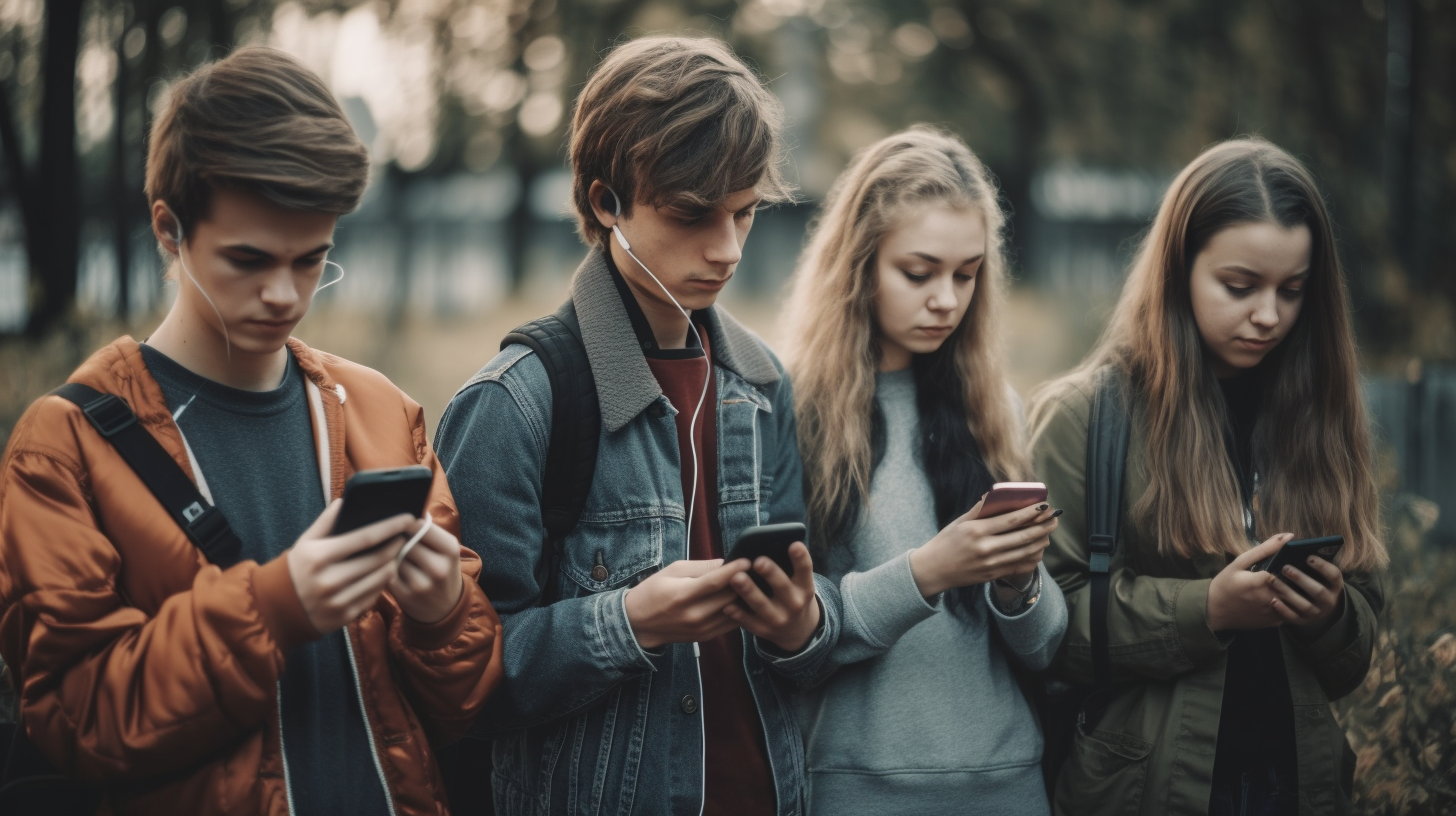
With over one billion Facebook users worldwide (as of October 2012) it looks like social networks are here to stay. And as of September 2012, the majority of American teens (58%), ages 13-17, now own a smartphone, so they are able to access the internet and social networks 24/7, wherever they are.
Although the jury is still “out” on the positive vs. negative influences of social networks on teens, tweens or even younger kids, there are certainly dangers involving their use. Cyberbullying, the posting of private information or images, and other online safety issues should concern you as parents.
The following infographic provides some statistics about how often your kids are on social networking sites, what they do when they are there, and the possible dangers involved.
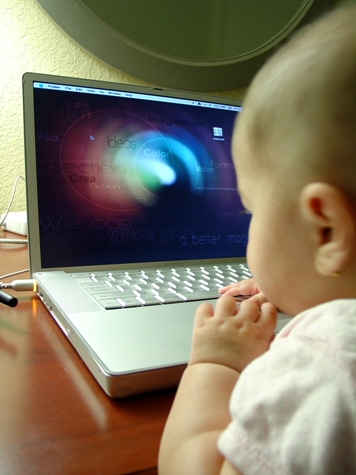
These days, it is not unusual to see toddlers intuitively swiping screens and confidently pressing buttons on an iPad or similar tablet. But even parents, who enjoy the momentary peace that comes with handing a small child a gadget to play with, worry that this screen time may not be healthy for them. On the other hand, whether you like it or not, technology, in the form of phones and tablets, is here to stay. Many elementary schools and some pre-schools are introducing iPads into the classroom to facilitate learning. So the question isn’t if your child will be computer literate, it’s when — and how soon is too soon to start thinking about technology for children.
How much is too much?
So, what’s good about technology for my toddler?
For young kids technology can fine tune motor skills and improve eye-hand coordination. It can also teach them cause and effect – every button, character or icon they press or swipe causes something to happen. And as technology is becoming more and more prevalent in the schools – it is good for them to become technology literate. And experts say that good-quality programs and specific software can help children with learning difficulties develop the skills they are lacking.
OK, so why not?
More time in front of a screen means less time with other kids – so their social skills may not develop as they should. It also means less time for hands on experience with the real world – touching and feeling real objects which should be part of the development process for any young child. Your toddler may also be over stimulated by all those sensory effects — loud sounds, bold colors, flashing lights, and endless action. And finally, toddlers need physical activity to stimulate growth – to build muscles and learn what their bodies are capable of. More time in front of a screen may be mentally stimulating but reduces good old fashioned physical play time. And some experts say that early screen viewing is likely to lead to long periods of viewing for the rest of your life – in other words – addiction.
I’m confused, what should I do?
Based on current research, here are some rules of thumb, on how to deal with your toddlers and technology:
No screen time under the age of 2 – the American Academy of Pediatrics (AAP) recommends that children under the age of 2 have no screen time at all. In 2013 the US Department of Health recommended that children under two years of age should not be in front of a screen at all, and over that age the maximum leisure screen time should be no more than two hours a day.
Two hours of screen time each day is enough for children aged six and under (and over two).
There is no evidence to suggest screens are unhealthy for young kids.
Children typically get bored with one type of media quite quickly, and tend to combine screen time with playing with toys and physical play of themselves.
Remember that technology itself doesn’t create problems, what matters is what we do with it. Just as you monitor the foods your kids eat, you should introduce quality media when they’re ready, help them think about what they see and hear, and make sure they’re not sacrificing time for physical activity, family, or friends.
Set family rules for screen times. For example: put screens away during meal times.
Set an example – ever catch yourself checking your email, using your Smartphone or watching TV while your child is trying to talk to you? Stop using the device and communicate with your child face to face. This will set a good example for the child.
No screens before bedtime – take some time between screen time and sleep. Most screens use LCDs that emit a blue light that inhibits sleep and disrupts the body clock.
Don’t be afraid of boredom. Being over stimulated is worse than being bored. Children need to learn how to deal with boredom. Learning to cope with boredom leads to greater self sufficiency, and less risk of later become addicted to unhealthy activities.
Online activities are an integral part of your children’s lives and they probably spend many of their waking hours surfing the net. Your children use the Internet to study, browse for information, socialize, or play games. These are all constructive activities and there is no doubt that your children can derive tremendous benefits from the Internet.
But that same wonderful environment can very easily become unhealthy and unsafe and even threatening for your children. The increasingly popular social networking sites, instant messaging programs, and chat rooms are just a few potentially dangerous applications that your children probably use regularly. These and others are often misused by sexual predators and cyber bullies who are lurking around the corner, just a few clicks away.
You can’t keep your children off the Internet but you can try to make it a safer place for them, by following a few practical steps that will keep your children safe online.
Discuss!
First of all, discuss the following safe Internet use rules with your children:
Use caution with your personal information
Avoid publishing your full name, your school name, home address, email address, mobile or home phone numbers and images, where they are easily accessible by others. Use caution especially with social networking sites such as Facebook or MySpace
Never give out personal details to online friends you do not know offline
Never post anything you wouldn’t want your parents, teachers, or future employers to see
Remember that once you post information online, you can’t take it back. Even if you delete the information from a site, older versions exist on other people’s computers
Do not share other people’s personal information or say things that might violate the safety or rights of others, even if you mean it as a “joke”
Do not share passwords, user names, account IDs or PINs with anyone besides your parents
Do not leave mobile phones or other personal electronics (such as a laptop, iPhone, Blackberry, PDA, etc.) unattended
Remember there are impersonators out there who lie about their real identity. Someone you meet on the Internet may not be the right person to share your problems with, not to mention meeting with them face to face
Never agree to meet someone you only know online without your parents’ consent
Never open messages or attachments from someone you don’t know. It could be a virus, or worse – an inappropriate image or film
Only add people as friends on social networking sites and instant messaging programs if you know then in real life. Set privacy settings so that you have to approve people to be added as a friend
What you do not do in real life, don’t do on the Internet. This includes all kinds of cyber bulling using text, photos and videos
Talk to your parents if something feels inappropriate or makes you feel uncomfortable.
Take measures
In addition to discussing the rules with your children, these are a few proactive steps that you can take:
Place the computer in an open area in your home – not in your children’s bedroom. But remember that your children have other means of accessing the Internet and communicating with their peers. Pay attention to other computer and Internet-enabled mobile devices.
Set clear expectations for your children, based on age and maturity
Is there a limited list of websites your children can visit for their school work?
Are they allowed to use a search engine?
Are they allowed to visit social networking sites such as Facebook and MySpace?
Are there sites they are allowed to visit just for fun?
Write down the rules and place them next to the computer. Your childrens’ teachers should be able to advise you which sites are appropriate for schoolwork and educational fun
Install parental control (content filtering) software, to help you limit the websites your children visit, monitor their online activity, limit the amount of time your children spend online, block file sharing programs and protect them from offensive content or cyber bullies. Pure Sight does all this and more. Click here to find out how.Don’t forget to inform your children that you have done this. Explain to them that that you are not spying on them – you are keeping them safe!
Limit and monitor the amount of time your children spend on the Internet, and at what times of day. Too much time online, especially at night, may be a sign of a problem. PureSight can help you do this!
Learn Internet basics: If you are not computer savvy, enlist the help of those who are. Learn the basics of the Internet so that your children do not become complacent. Look at blogs and social networking sites to see what children are doing. Go ahead and create your own accounts and play around with it a bit. Get on your children’s friends list
Be approachable: try to keep an open communication channel with your children, so that they trust you and feel free to approach and ask you anything or tell you about things that are bothering them. Talk to your children regularly about their online activities.
Lead by example. Your children are watching you. Limit your online time and use the Internet and your mobile phone wisely.
With over one billion Facebook users worldwide (as of October 2012) it looks like social networks are here to stay. And as of September 2012, the majority of American teens (58%), ages 13-17, now own a smartphone, so they are able to access the internet and social networks 24/7, wherever they are. And summer vacation means a lot of free time for your kids, no doubt a lot of it will be spent on social networks!
Although the jury is still “out” on the positive vs. negative influences of social networks on teens, tweens or even younger kids, there are certainly dangers involving their use. Cyberbullying, the posting of private information or images, and other online safety issues should concern you as parents. But the good news is that there are quite a few things you can do to provide a safer social networking experience for your kids:
Talk to your kids: probably the most important tip on this list, it’s very important that you keep an open dialogue with your kids and discuss the possible dangers of using social networks, such as sharing private information or pictures for the world to see, or cyberbullying. Try to be approachable and not judgmental and explain that they should always let you know if someone or something is making them feel uncomfortable.Set ground rules Allow a limited time for social networking per day and try to make sure that your kids engage in other activities such as “real life” socializing and physical activities outdoors. It may be a good idea to sign a family online safety contract with your kids outlining the rules for using social networks such as the amount of hours per day or the times of day during which your child can use social networks.Set a good example: If you yourself use social networks, try to set a good example by limiting the amount of time you spend there, befriending only people you know and sharing very little private information.Be skeptical: Explain to your kids that they shouldn’t believe everything they read online. People may post false or misleading information about various topics, including their own identities. This is not necessarily done with malicious intent, but is still something to watch out for.Customize your kids’ privacy options: Make sure your kids don’t share information such as their last name, school, home address, cell phone number, email and IM addresses. Check out the settings, configuration and privacy sections of the social networking programs to see what options you have to limit who and what groups can see various aspects of their personal information. On Facebook, for example, you control whether no one, friends, friends and networks, or everyone can see basic info, personal info, photos, friends and postings.Enable content filtering / parental control: For starters, you can set up parental controls in Windows by selecting that option from the control panel. Or you can go ahead and install an online child safety program such as PureSight.Know your child’s password:. So you’ll be able to log into his/her account any time and see what’s going on. If you’re just “friends,” your child can configure his/her privacy settings to prevent you from seeing certain things, or even set up a separate account where you are not listed as a friend.Keep your child’s physical location private:. Disable Facebook Places and photo geo-tagging, and configure privacy settings for photo tagging on Facebook.Know their friends: . For younger children, their online friends should be friends that you know in real life. For teens, have them explain how they know each friend.Instruct your kids not to use third party applications (apps) shared within the network. Using these apps involves allowing them to access your kids’ private information.
Launched in February 2004, Facebook has recently announced that it has 1 billion active users worldwide1 (about 3 times the population of the United States!)
Although buried and eulogized many times over, Facebook’s popularity is still very much on the rise. Love it, hate it, there is absolutely no getting away from it. And it doesn’t look as if Facebook is going away in the near future.
So is it a good thing? How does it affect your kids? What are the advantages? What are the disadvantages? Here’s a look at some of the many ways in which this ever popular social networking site affects your kids’ lives in some good, and some not-so-good ways.
Pros
It’s easy! Setting up a profile is a smooth process, and the relatively uncluttered UI of the site is easy to navigate and use. It’s free and all you need is an internet connection and any device that can connect to the internet, mobile phones included.Beyond boundaries: Facebook transcends all physical boundaries, and lets your kids connect with far away friends and distant family. Your kids can easily be informed about what goes in the lives of people who are physically distant.Your child decides who to share with. Your child can choose who they would like to share their status updates, photos or check-ins with.A place to share thoughts, causes and ideas. Your child can interact with kids with similar interests and ideas across the globe. They can join groups and support fan pages, and find out what other kids are interested in.Enhances social skills. Facebook allows kids to keep up with current friends and make new ones. When used in the right way, social media can increase a child’s self-esteem and help them feel less isolated, as if they belong to a group. Facebook also allows those who are shy or have trouble making friends to socialize more easily. And let’s face it – everybody’s on it…It’s educational! A majority of tweens and teens use social networking to discuss school work and share discussions about school assignments.Kids can be mean:cyberbullying can be a real problem. There are even some documented cases of kids who committed suicide after being bullied on social networks!Things aren’t always what they seem There are many fake Facebook accounts, information that is misrepresented – your child could be exposed to these.
Cons
Privacy: Privacy is a major concern for most Facebook users, and it’s really important to understand the site’s privacy settings and set them accordingly. And even though a lot has been done to improve the site’s security, it can still be confusing. As a result, hackers can have access to- and misuse- personal information.Time consuming Facebook is a real time guzzler – your kid could be playing outdoors, doing homework or doing other more meaningful things.Freedom of expression? Other kids (or even your own for that matter) on Facebook could misuse that freedom and post offensive or inappropriate content, which your kids will see! And this leads us to the next point:It’s addictive! Besides all the social features there are games on Facebook that can be very addictive. Did anyone mention Farmville?Whose image is it anyway? Once your child uploads an image to Facebook, it becomes public and anyone can download and misuse that image. Its anti-social? For your kids online interaction could become a replacement for face-to-face meetings. This can hurt social development and isolate your kids.It can hurt their future: kids can post regrettable information or photos that will be discovered by college admissions or potential employers in the future. Once information goes online, it never goes away.
So does the good outweigh the bad? It’s hard to tell. Either way you probably won’t be able to completely block your kids from using it. So it’s important to remember that if your kids are on Facebook, they should be aware of the dangers, and they should take steps to protect themselves, such as adjusting the privacy settings. It’s your job as a parent to explain the dangers and help them protect themselves, but also to be there for them, to listen and help, if they experience something that makes them feel uncomfortable or scared.
PureSight provides protection from cyberbullying and suspicious contacts on Facebook and you don’t even have to be “friends” with your child.
Summer vacation is here and time away from school could mean plenty of extra time online for your kids – a lot of it happening when you’re not around to supervise.
And while the Internet can be a great source of fun and social interaction for your kids, it can also be a dangerous place. And while it feels like home is the safest place for your kids – the more time they spend online the more they could potentially be exposed to inappropriate content (pornography, hate, violence, etc.), cyberbullying, and other online dangers.
Following are some suggestions that will help you keep your kids safe, when online, this summer:
Kids are more likely to meet online friends in person during the summer. This may not always be such a bad idea, if handled correctly. Together with your kids, make sure the following rules are adhered to:
Your permission and involvement is required.Any meeting should be in a public place that you have selected, with plenty of people around, after you have learned about this friend and their family. You should always be there to make sure everything is OK.Trust your instincts. If anything doesn’t feel right – cancel the meeting.Use filtering and blocking software. . PureSight can assist you in monitoring your children’s online behavior on both PC and mobile devices, setting time limits and in blocking offensive and hateful content, even on Facebook and in instant messaging programs.